Your Round, Doctor: How the Local Pub and Corner Café Are Prescribing Better Health Than You'd Expect
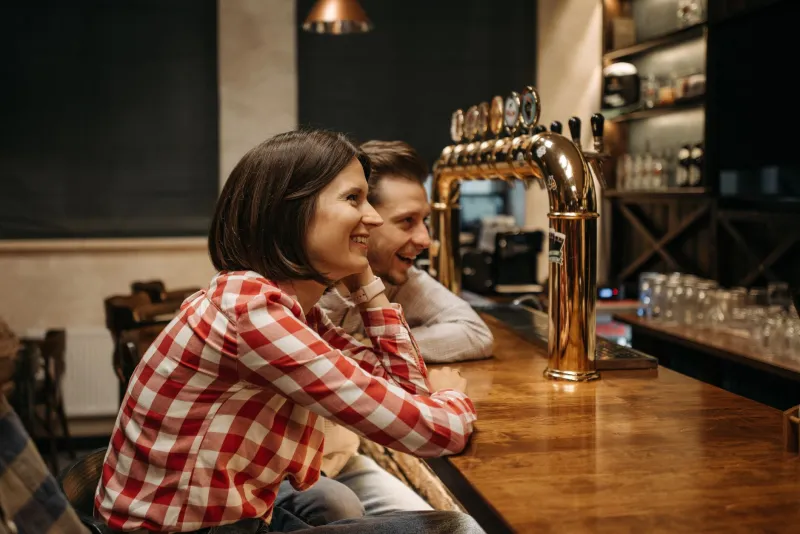
It doesn't look like a health intervention. There's no waiting room, no referral form, no laminated poster about blood pressure. There's a slightly sticky table, a regulars' corner, the smell of coffee and something fried, and a person behind the counter who knows your name and your order without being asked.
And yet, according to a compelling and rapidly growing body of research, Britain's neighbourhood pubs, corner cafés, and community tea rooms are delivering measurable health outcomes that rival — and in some cases outperform — formal clinical services. Not because of what they serve, but because of what they create: genuine human connection, repeated over time, in a low-pressure environment.
Public health researchers are paying very close attention.
The Loneliness Epidemic Nobody Wants to Talk About
Before we get to the good news, let's acknowledge the context. The UK has a loneliness problem of startling proportions. A 2023 report from the Campaign to End Loneliness found that more than nine million adults in Britain describe themselves as frequently or always lonely. The health consequences of chronic loneliness are, at this point, well documented and deeply serious: increased risk of cardiovascular disease, dementia, depression, and all-cause mortality.
Former Surgeon General of the United States Vivek Murthy famously described loneliness as having the equivalent health impact of smoking fifteen cigarettes a day. The NHS has taken the issue seriously enough to appoint a Minister for Loneliness and to fund social prescribing schemes that actively connect isolated patients with community activities.
But here's what the research is increasingly suggesting: the most effective antidote to loneliness isn't a formal programme. It's a familiar place with familiar faces, visited with some regularity, where no particular agenda is required.
In other words: the local.
What Robin Dunbar Found Down the Pub
Professor Robin Dunbar, the Oxford evolutionary psychologist best known for 'Dunbar's Number' (the theory that humans can maintain stable social relationships with roughly 150 people), has spent considerable time researching the health effects of pub culture specifically. His findings are striking.
In a 2017 study, Dunbar found that people who had a 'local' — a regular pub they visited consistently — reported higher levels of social satisfaction, greater feelings of community belonging, and significantly higher life satisfaction scores than those without one. More remarkably, having a local was a stronger predictor of wellbeing than the total size of a person's social network.
Quality over quantity. Depth over breadth. The regulars' table over the Instagram following.
"The pub," Dunbar wrote, "serves as a place where people can meet their wider community face-to-face in a relaxed, unhurried way. It functions as a kind of social glue." That social glue, his research suggests, has direct and measurable physiological effects — including increased endorphin release and reduced stress hormone levels in those who participate regularly in communal social rituals.
The Café Effect
Pubs aren't the only informal health hubs flying under the radar. Independent cafés — particularly those that cultivate a regular clientele rather than chasing throughput — are emerging as equally significant spaces in the community health ecosystem.
Research from the University of Edinburgh's Centre for Research on Families and Relationships has highlighted the role of what sociologists call 'third places' — spaces that are neither home nor work — in maintaining mental health and social cohesion. Cafés, particularly those with communal seating, a welcoming atmosphere, and staff who engage with customers rather than just processing them, function as third places par excellence.
Martin, a 67-year-old retired teacher from Bristol, has been going to the same café every weekday morning for eleven years. "After my wife died, I went through a period where I genuinely didn't speak to another person for days at a time," he says. "The café changed that. Not because anyone was doing anything official — just because Gemma behind the counter would ask how I was and actually wait for the answer. That sounds like nothing. It wasn't nothing."
For Martin, the café visit became an anchor point that structured his day, provided consistent social contact, and gave him a reason to get dressed and leave the house — three things that mental health professionals identify as foundational to recovery from grief and depression.
Social Prescribing Meets the High Street
The NHS has been quietly formalising what many community members have known intuitively for years. Social prescribing — the practice of connecting patients with non-clinical community activities and spaces as part of their care — is now embedded in primary care networks across England, with link workers in GP surgeries actively directing patients towards community groups, social activities, and yes, sometimes specific local venues known for their welcoming atmosphere.
In some areas, this has become remarkably specific. GPs in parts of Yorkshire and Lancashire have been signposting isolated older patients towards particular cafés that have committed to a 'dementia-friendly' or 'socially inclusive' approach. In South London, a network of community pubs has partnered with local health authorities to host weekly social mornings specifically designed for people experiencing loneliness.
Dr. Jonty Heaversedge, a GP and NHS England clinical lead for social prescribing, has spoken publicly about the value of informal social spaces in his patients' health journeys. "We have people who come to us with what presents as anxiety or depression, but the underlying issue is isolation," he has explained. "A pill doesn't fix isolation. A community does."
What Makes a Space Genuinely Healthy?
Not all pubs and cafés are created equal, of course. The health benefits researchers identify are strongly tied to specific qualities of the space and its culture. The most health-promoting informal venues share some common characteristics:
Consistency of staff. Knowing the person who serves you — and being known by them — is central to the belonging effect. High staff turnover undermines it.
Tolerance of lingering. Health-promoting third places allow people to stay without pressure to spend more or move on. The hour-long coffee that's really an hour of human connection.
Mixed demographics. Spaces that attract a range of ages, backgrounds, and life stages foster the kind of 'weak tie' social connections that research identifies as particularly beneficial for mental health and community resilience.
Low-stakes entry. No membership, no commitment, no social performance required. You can come in, sit down, and be quietly present without needing to be 'on.'
An Unlikely Prescription
None of this means that a pint of bitter is the cure for cardiovascular disease, or that a flat white replaces antidepressants. The health benefits here are real but specific: they relate to social connection, sense of belonging, purpose, and routine — all of which are genuine and significant determinants of long-term health.
What the research collectively suggests is that Britain's network of informal social spaces — many of them struggling commercially, many of them undervalued culturally — represents a public health asset of considerable importance. Every community pub that closes, every independent café that gives way to a chain, represents not just a commercial loss but a health infrastructure loss.
That's a reframing that public health advocates are increasingly pushing. And it's one that anyone who's ever felt the particular comfort of a familiar stool, a familiar face, and a drink that arrives without being asked for, will understand immediately.
Some of the best medicine, it turns out, doesn't come in bottles. It comes in rounds.