Pulling the Plug on Anxiety: The British Communities Switching Off — and Watching Their Health Transform

Think about the last time you sat in a room full of people and nobody looked at their phone. Can't remember? Neither can most of Britain. But in a growing number of communities — from market towns to city housing estates — something deliberately countercultural is taking root. People are creating spaces and times where screens simply aren't welcome. And the health data emerging from these experiments is making some very serious people sit up very straight.
This isn't a digital detox retreat for the wealthy. This isn't a Silicon Valley executive's weekend off the grid. This is ordinary British people, in ordinary British places, making a collective decision to reclaim something they didn't fully realise they'd lost.
The Village That Voted to Switch Off
Chipping Campden, a market town in the Cotswolds with a population of around 2,500, became something of an accidental case study in 2023 when its community hall committee introduced what they diplomatically called 'connection evenings' — monthly gatherings where phones were left in a basket at the door.
 Photo: Chipping Campden, via c8.alamy.com
What began as a slightly awkward social experiment — there was reportedly a great deal of fidgeting in the early sessions — evolved into the most popular community event the hall had hosted in years. A waiting list formed. A second evening was added. Then a third.
"People kept saying they felt lighter afterwards," says Margaret Holloway, 67, one of the founding committee members. "Not just relaxed — actually lighter. Like they'd put something down that they hadn't noticed they were carrying."
The anecdote is charming. The physiology behind it is genuinely fascinating.
What Your Phone Is Actually Doing to Your Stress Response
Cortisol — the body's primary stress hormone — is not inherently the villain it's often painted as. In appropriate doses and contexts, it's essential. The problem is chronic elevation: a sustained low hum of cortisol that never fully switches off, keeping the nervous system in a state of persistent, low-grade alert.
Researchers at the University of Derby published findings in 2023 suggesting that even passive smartphone use — scrolling without any specific goal — is associated with measurable spikes in salivary cortisol. A separate study from the University of Edinburgh found that participants who took a five-day break from social media showed cortisol reductions equivalent to those achieved through a structured mindfulness programme.
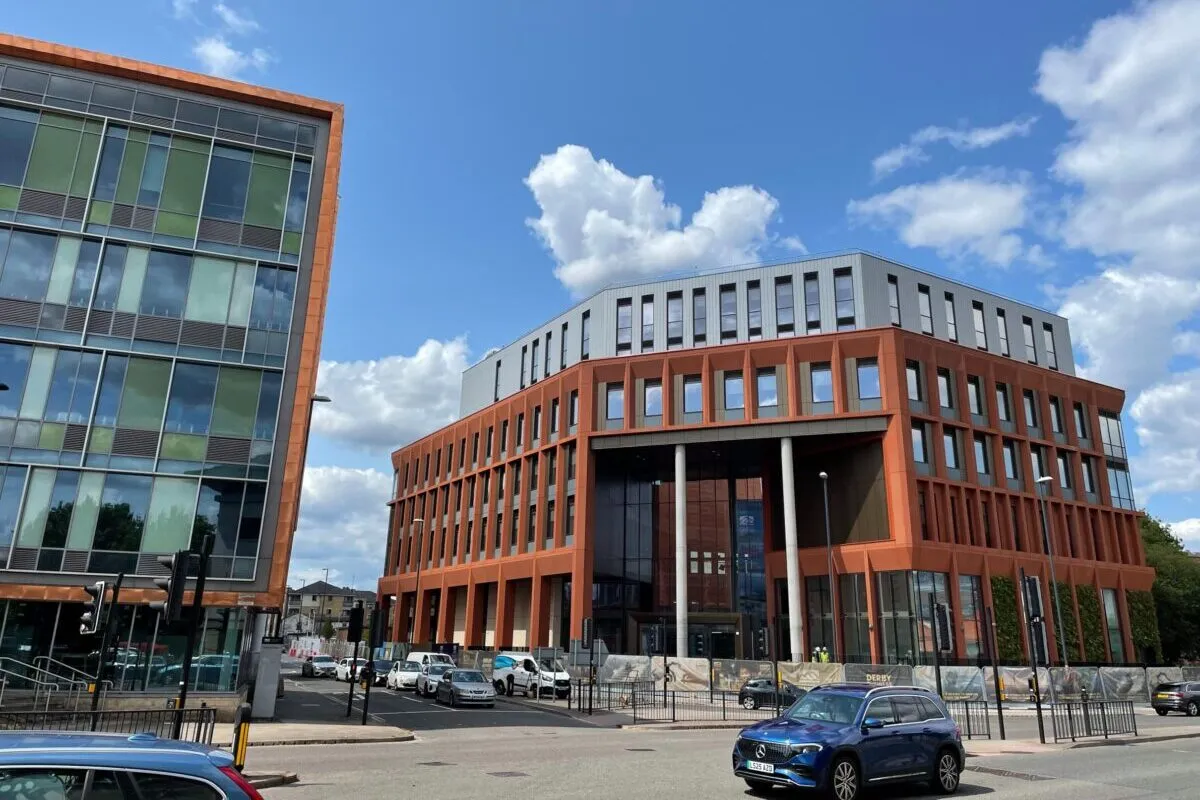 Photo: University of Derby, via www.fenews.co.uk
The mechanism isn't complicated. Notifications trigger micro-stress responses. Comparison culture on social media activates threat-detection pathways. The infinite scroll is specifically engineered to prevent the neural 'completion' signal that tells your brain it can relax. Every swipe is, in a very literal sense, keeping your stress response alive.
For Dr Rajan Mehta, a GP in Leeds who has been quietly advocating for tech-free community spaces in his surgery's catchment area, the research confirms what he's been observing clinically for years. "I was seeing patients — particularly younger ones — presenting with anxiety symptoms that didn't fit neatly into any diagnostic category. No major life events, no clinical triggers. But every single one of them was sleeping badly, feeling overwhelmed, and spending six-plus hours a day on their phones. The connection seemed obvious."
Leeds: Where a Housing Estate Went Analogue
In the Harehills area of Leeds — a dense, diverse urban neighbourhood that rarely features in glossy wellness magazine profiles — a community organiser named Damilola Adeyemi started something she calls 'Front Door Fridays' in early 2023.
The concept is simple to the point of being almost laughably lo-fi: residents are invited to sit outside their front doors between 6pm and 8pm on Friday evenings, without phones, and simply be present in the shared space. Chat if they want. Sit quietly if they don't. The only rule is no screens.
"People thought I was mad," Damilola says, laughing. "This isn't a neighbourhood where people typically do things like this. But the first Friday, three families came out. By the sixth week, we had thirty people. By three months, we had neighbours who'd lived twenty metres apart for a decade finally knowing each other's names."
The health outcomes Damilola has observed — anecdotally, though Dr Mehta's surgery is now formally tracking a small cohort — include self-reported improvements in sleep quality, reductions in anxiety, and, perhaps most significantly, a measurable decrease in the social isolation that is one of Britain's most pressing public health challenges.
One participant, a 29-year-old woman named Fatima who had been on a waiting list for CBT for 14 months, told Damilola that Front Door Fridays had done more for her anxiety than anything else she'd tried. "I'm not saying it cured me," Fatima is careful to add. "But it gave me two hours a week where my brain just... stopped. I didn't know how badly I needed that."
The Sleep Dividend
If there's one health metric that appears most consistently in the emerging research around tech-free time, it's sleep. The relationship between screen exposure — particularly in the evening hours — and disrupted sleep is one of the most robustly evidenced findings in modern sleep science.
Blue light emitted by smartphone and tablet screens suppresses melatonin production, delaying the onset of sleep. But beyond the light itself, the cognitive stimulation of scrolling, messaging, and consuming content keeps the prefrontal cortex active well beyond the point where the body is ready to rest.
Communities that have introduced structured offline evening hours are reporting sleep improvements that their GPs are finding striking. In a rural Northumberland village where the local community group introduced a 'phones away at 9pm' social pledge last year, a small informal survey found that 71% of participants reported falling asleep faster within three weeks, and 58% described their sleep as feeling more restorative.
These aren't randomised controlled trials. The scientific community would rightly caution against over-interpreting self-reported data from small community samples. But as directional evidence that points towards a formal research agenda, they're compelling enough to have attracted the interest of public health academics at Newcastle University, who are currently designing a larger study.
Can This Scale?
The obvious question is whether something as organic and community-driven as a 'Front Door Friday' or a phone-free village hall evening can translate into meaningful public health policy. The honest answer is: not directly. You can't legislate belonging. You can't prescribe analogue community.
But what you can do — and what several forward-thinking local authorities are beginning to explore — is create the conditions for it. Funding community spaces explicitly designed for tech-free social connection. Supporting link workers who can signpost socially isolated patients towards offline community activities. Designing public spaces that encourage face-to-face interaction rather than phone use.
Dr Mehta is cautiously optimistic. "The NHS is brilliant at treating illness. We're getting better at preventing it. But the stuff that really moves the needle on population health — connection, belonging, genuine rest — that happens in communities, not clinics. Our job is to support communities to do what they're already capable of doing."
In Chipping Campden, the basket at the door of the community hall is getting fuller every month. In Harehills, the front doors are opening. Somewhere in Britain right now, someone is putting their phone down and looking up.
The health data suggests that's one of the most powerful things they could possibly do.