Step Counts Don't Lie: The Millions of Brits Getting Fitter at Work While the Rest of Us Pay Gym Fees
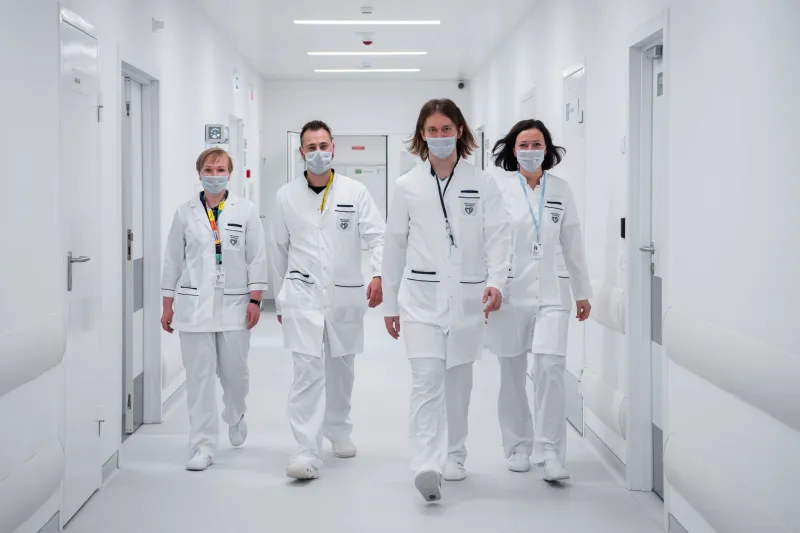
Step Counts Don't Lie: The Millions of Brits Getting Fitter at Work While the Rest of Us Pay Gym Fees
At 6am, Dave is already moving. The Royal Mail postman from Huddersfield has loaded his van, sorted his round, and is now walking — briskly, purposefully, without headphones or a heart rate monitor — through a series of residential streets in West Yorkshire. By the time most office workers have finished their first coffee, Dave will have covered eight miles on foot and climbed the equivalent of fifteen flights of stairs.
He does this five days a week. He's 52. His resting heart rate is 54 beats per minute. He's never owned a gym membership.
"People ask me how I stay in shape," he says, grinning. "I just tell them: I go to work."
Dave belongs to a vast, largely invisible cohort that health researchers are only now beginning to properly appreciate — the UK's occupational movers. Postmen, nurses, retail workers, construction labourers, warehouse operatives, carers. Millions of Britons whose jobs involve sustained physical activity, and who are accruing serious health benefits without a single structured workout to their name.
The Numbers Are Staggering
Let's start with some figures that should make every desk worker put down their lukewarm flat white.
A study by the British Journal of Sports Medicine found that Royal Mail postal workers who walked or cycled for more than three hours a day had virtually no increased risk of heart disease — regardless of how much time they spent sitting outside work. Their cardiovascular profiles were, in many cases, superior to those of people who exercised regularly in their leisure time but sat for the remainder of the day.
Meanwhile, NHS nurses — particularly those working on busy ward floors — routinely clock between 10,000 and 15,000 steps per shift. Some exceed 20,000 on particularly demanding days. Research published in Occupational and Environmental Medicine found that nurses who worked physically active ward roles showed significantly lower rates of metabolic syndrome than their counterparts in more sedentary healthcare positions.
Retail workers tell a similar story. A study tracking supermarket floor staff found average daily step counts of 12,400 — nearly double the often-cited 10,000-step benchmark — alongside meaningful caloric expenditure and measurable improvements in lower-body strength over time.
Why Occupational Movement Is Different — and Why That Matters
Here's the thing that sports scientists find genuinely fascinating: the health benefits of occupational movement can't simply be explained by the physical activity alone. The pattern of that movement appears to matter enormously.
Unlike a 45-minute gym session followed by eight hours of sitting, occupational movement is distributed throughout the day. It interrupts sedentary behaviour consistently and repeatedly — which, according to a growing body of research, is precisely what the human body needs.
"We evolved to move frequently and moderately, not intensely and occasionally," explains Dr. Sarah Connelly, an exercise physiologist at Loughborough University. "Occupational movement mimics that ancestral pattern far more closely than a structured gym session does. The metabolic benefits of breaking up sedentary time are genuinely significant and have been consistently underestimated by the wellness industry."
 Photo: Loughborough University, via w7.pngwing.com
This is a direct challenge to the dominant narrative around exercise — one that positions gym-going, fitness classes, and personal training as the gold standard of healthy movement. For the wellness industry, which is worth billions globally, acknowledging that a postman's daily round might be more cardioprotective than a spin class is not exactly a comfortable message.
The Invisible Athletes Among Us
The term 'invisible athlete' was coined by researchers at the University of Exeter to describe exactly these workers — people whose jobs deliver athletic-grade physiological adaptations that go almost entirely unrecognised in mainstream health culture. Because they're not wearing compression leggings or posting their VO2 max on Instagram, their fitness tends to be overlooked.
But the data is hard to argue with. Construction workers in a 2022 study showed bone density scores comparable to recreational weightlifters. Warehouse operatives demonstrated grip strength and functional mobility metrics that placed them comfortably above average for their age groups. NHS physiotherapists working in rehabilitation settings — moving patients, assisting transfers, demonstrating exercises — showed cardiovascular endurance profiles that surprised even the researchers conducting the study.
"These are people whose bodies are being trained every single day," says Dr. James Okafor, a sports scientist at King's College London. "The adaptations are real, they're measurable, and they're happening completely outside the gym ecosystem. We need to start taking that seriously as a public health community."
 Photo: King's College London, via media.9news.com
The Catch Nobody Wants to Mention
It would be dishonest not to flag the other side of this. Occupational movement is not without its risks, and this article isn't an argument for everyone to quit the gym and get a job in a warehouse.
Repetitive strain injuries, musculoskeletal problems, and workplace fatigue are genuine concerns for many physically active workers — particularly those in roles that involve awkward postures, heavy lifting without adequate training, or sustained standing on hard surfaces. Nurses, in particular, face high rates of back and knee problems. The health benefits of occupational movement are real, but they don't make unsafe working conditions acceptable.
What the research does suggest, powerfully, is that the principle of distributed daily movement — frequent, moderate, purposeful physical activity woven through the working day — is something that desk workers and policy-makers should be urgently trying to replicate.
What Office Workers Can Actually Take From This
The lesson here isn't that you need to retrain as a postman (though Dave would probably tell you it's not the worst idea). It's that structured leisure exercise, while valuable, is not sufficient to counteract the physiological damage of prolonged sitting — and that building movement into the fabric of your working day is one of the most powerful health interventions available.
Standing desks. Walking meetings. Taking the stairs. Walking to a colleague's desk instead of emailing. Popping out at lunch rather than eating at your screen. None of it sounds glamorous. None of it will get you a fitness influencer deal. But the cumulative effect — replicated across a working week, month, year — is genuinely transformative.
"The gym is wonderful if you can access it and enjoy it," says Dr. Connelly. "But we've created a cultural narrative that says exercise only counts if it's structured and deliberate. That narrative is not just wrong — it's actively putting people off moving at all. The invisible athletes prove that movement is medicine, whatever form it takes."
Dave finishes his round at about half eleven. He has a cup of tea, puts his feet up, and doesn't think about his cardiovascular health for a single second. He doesn't need to.
His body has already done the work.