Worth the Wait: Why Being on an Allotment Waiting List Is Already Good for You
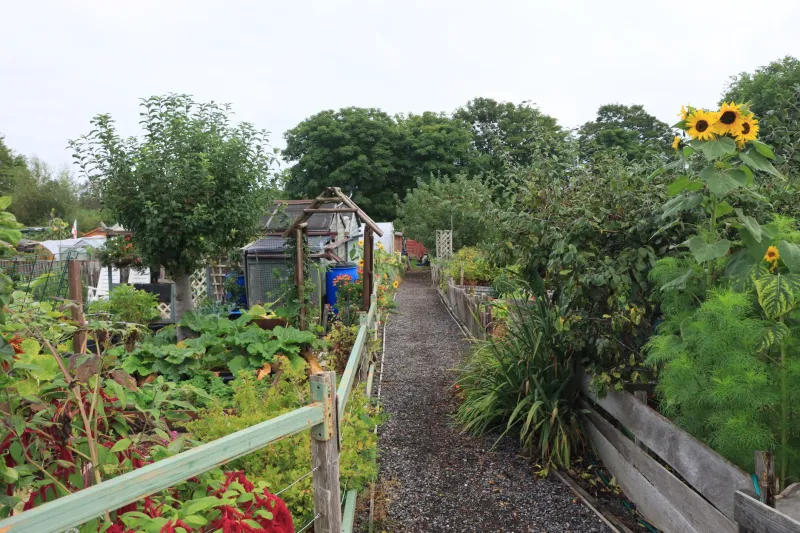
Somewhere in Hackney, there's a list. It has roughly 2,500 names on it. The estimated wait time is somewhere between seven and ten years. And yet — and this is the bit that should probably make headlines — a significant number of those people report that simply being on it has made them feel better.
Welcome to the curious psychology of Britain's allotment boom, where the waiting list has become, accidentally, one of the country's most accessible mental health interventions.
A Nation Desperate to Dig
The numbers are striking. According to the National Allotment Society, demand for plots has surged dramatically since 2020, with councils across England, Scotland, and Wales reporting waiting lists that have doubled or even tripled in length. In some London boroughs, you'd be lucky to get a plot before your fortieth birthday if you sign up in your late twenties. Manchester, Bristol, Edinburgh — the story is the same everywhere. Britain wants to grow things, and there simply isn't enough soil to go around.
The reasons for this are well-documented: the pandemic rekindled a national relationship with outdoor space; the cost of living crisis has made the idea of growing your own food feel both practical and empowering; and a growing awareness of the mental health benefits of gardening has pushed it firmly into the mainstream wellness conversation. The Royal Horticultural Society reported that over half of UK adults now consider gardening important to their mental health. Half.
But here's the story that's been largely missed: what happens to people before they get the plot?
The Anticipation Effect
Psychology has long understood that anticipation — the act of looking forward to something — is itself a source of genuine happiness. Research published in the journal Psychological Science found that the pleasure derived from anticipating a positive experience can rival, and sometimes exceed, the pleasure of the experience itself. Scientists call it "prospective savoring," and it turns out that allotment hopefuls are doing it in spades (pun absolutely intended).
"I've been on my local list for three years," says Priya, a secondary school teacher from Leeds. "In that time I've read every book on kitchen gardens I can find, I've started growing herbs on my windowsill, and I've joined two online allotment communities. Honestly? I'm not sure getting the plot will be as exciting as imagining it."
That experience maps almost perfectly onto what psychologists describe as the positive cognitive effects of goal-oriented anticipation — the sense of purpose, the planning behaviour, the identity formation around a future self. "I'm going to be a person who grows their own tomatoes" is a remarkably powerful psychological frame, even when the tomatoes don't exist yet.
The Community That Grows Before the Crops
Perhaps the most unexpectedly lovely finding in all of this is what's happening socially among people on waiting lists. Across the country, informal networks have sprung up — WhatsApp groups, local Facebook communities, council-run forums — where allotment hopefuls swap tips, share seeds, and offer each other the kind of neighbourly warmth that urban life has quietly been eroding for decades.
In Sheffield, a group of forty-odd people on the same waiting list have formed what they call a "pre-allotment club" — meeting monthly to do communal gardening in each other's back gardens and balconies while they wait. In Brighton, a similar group has partnered with a local school to tend raised beds on the playground. The plot hasn't arrived, but the community, the purpose, and the therapeutic benefit? Very much already present.
This matters enormously in the context of Britain's loneliness crisis. The Campaign to End Loneliness estimates that around 3.83 million people in the UK are chronically lonely — a figure that carries serious health consequences, equivalent in impact to smoking fifteen cigarettes a day. Allotment communities, even pre-allotment communities, are functioning as an antidote to that isolation in ways that no policy could have engineered.
Why Gardening Works (Even in Your Head)
The therapeutic case for gardening itself is now robust and well-evidenced. Studies have shown that contact with soil bacteria (Mycobacterium vaccae, if you want to impress people at dinner parties) can stimulate serotonin production. Time outdoors regulates cortisol. Physical activity, even gentle digging and planting, supports cardiovascular health and improves mood. The sense of nurturing living things activates caregiving instincts that are deeply soothing to the human nervous system.
But interestingly, research suggests that even planning a garden activates some of these same psychological circuits. Visualising green space, engaging with nature-related content, and connecting with others around shared horticultural goals all appear to confer measurable mood benefits. The brain, it turns out, is not always brilliant at distinguishing between doing a thing and vividly imagining doing a thing — which is why sports psychologists use visualisation so extensively, and why your allotment daydreams might be doing more good than you'd expect.
What Councils Could Learn From All This
There's a practical argument here for local authorities, too. If the waiting list itself is generating community connection and wellbeing, then the infrastructure around that list matters. Councils that actively support pre-allotment communities — through shared spaces, seed libraries, or even just well-maintained noticeboards — are effectively extending the therapeutic reach of a finite resource.
Some are already catching on. Lambeth Council has begun hosting quarterly "growing skills" workshops specifically for people on their waiting list. Bristol City Council has partnered with community gardens to offer plot-sharers priority access while they wait. These initiatives cost relatively little and deliver outsized social value — which, in the current climate, seems like exactly the kind of thing we should be celebrating loudly.
Get on the List
If you're not already on your local allotment waiting list, consider this your nudge. Yes, you might wait years. Yes, the plot might not materialise until you've forgotten you applied. But in the meantime? You'll have a project, a community, a reason to think about something other than your inbox, and a slowly forming identity as someone who grows things.
And honestly, in a world that moves too fast and asks too much, there's something quietly radical about signing up for something that requires patience.
The wait, it turns out, is the point.