Suds and Serenity: The Kitchen Sink Secret That's Beating Britain's Stress Epidemic
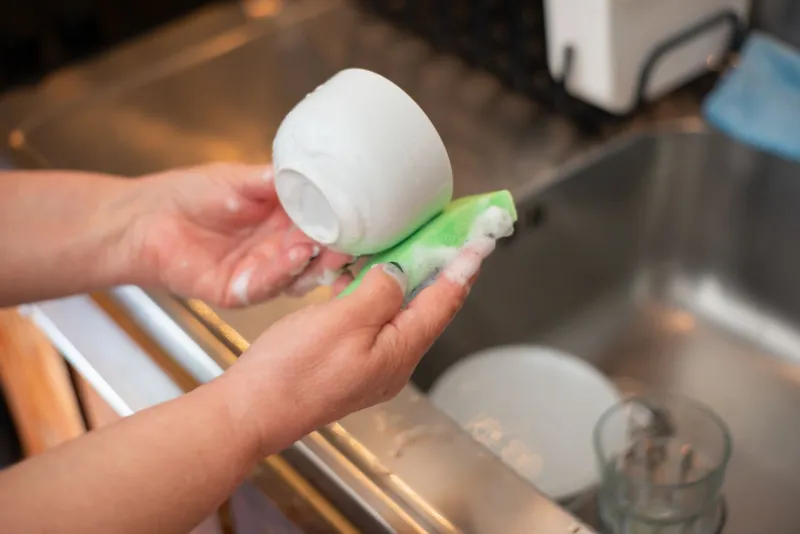
There's a moment — somewhere between rinsing the pasta pot and tackling last night's baking tray — when something shifts. The mental chatter quietens. The to-do list fades. And for a few glorious minutes, the only thing that exists is warm water, the faint smell of Fairy liquid, and the gentle clink of crockery. Sound familiar? Turns out, you've been meditating without even knowing it.
Across Britain, a quiet revolution is happening at kitchen sinks. Not a trendy one with a membership fee or a celebrity ambassador — just ordinary people discovering that hand-washing dishes, done deliberately and without distraction, is one of the most effective mindfulness practices going. And the science? It's catching up fast.
What the Research Actually Says
Back in 2015, a study from Florida State University — now doing the rounds again in wellness circles — found that participants who washed dishes mindfully (paying attention to the warmth of the water, the scent of the soap, the texture of each plate) reported a 27% reduction in nervousness and a measurable increase in mental inspiration compared to those who simply cracked on with the chore.
That might not sound groundbreaking, but consider what's actually happening neurologically. Repetitive, rhythmic tasks engage what researchers call the "default mode network" — the brain's background hum — in a way that allows the prefrontal cortex (your stress command centre) to genuinely rest. It's the same principle behind knitting, colouring books, and those pottery classes that have been popping up on every high street. Except washing up costs nothing and you're doing it anyway.
Dr. Sarah Vohra, a consultant psychiatrist who frequently speaks on everyday mental health interventions, has long championed what she calls "incidental mindfulness" — the idea that you don't need to carve out special time for wellness if you can embed it into what you're already doing. "We've overcomplicated mindfulness," she told us. "The most powerful interventions are often the most boring-sounding ones."
Sensory Grounding in Disguise
Here's the bit your therapist would love: washing up ticks almost every box for sensory grounding, a technique widely used in cognitive behavioural therapy to interrupt anxiety spirals and bring people back into their bodies.
Warm water activates thermoreceptors in the skin, sending calming signals to the nervous system. The repetitive motion of scrubbing engages proprioception — your body's awareness of itself in space — which has a demonstrably settling effect on the amygdala, the brain's alarm system. And the mild, familiar scent of washing-up liquid? Olfactory triggers are among the fastest routes to emotional regulation, bypassing the thinking brain entirely and hitting the limbic system directly.
In other words, your kitchen sink is basically a sensory spa. A slightly soapy, occasionally greasy sensory spa — but a spa nonetheless.
The Dishwasher Dilemma
Now, nobody's suggesting you throw out the Bosch. But there's an interesting case for occasionally choosing not to use it. The dishwasher, brilliant as it is, removes the human element entirely — the tactile engagement, the pacing, the small meditative rhythm of the task. It's efficient, yes. Restorative? Not so much.
Some Brits are already making this choice consciously. In online communities dedicated to slow living and intentional habits, hand-washing dishes has become a surprisingly popular evening ritual — a way to decompress after work without reaching for a phone or defaulting to the telly. "I started doing it after a really difficult period at work," wrote one user in a popular Reddit thread on mindful habits. "I'd just stand there for twenty minutes after dinner, no podcast, no music. It sounds mad but it genuinely helped me sleep better."
It doesn't sound mad at all, actually. It sounds like someone who accidentally stumbled onto something clinical psychologists have been quietly recommending for years.
How to Actually Do It (Without Feeling Daft)
The key difference between mindful washing-up and just washing-up is intention. Here's how to make the switch:
Put the phone in another room. This is non-negotiable. The moment you're half-listening to a podcast or scrolling between rinses, the meditative quality evaporates.
Tune into the temperature. Really notice whether the water is warm or hot. Let that sensation be interesting to you.
Go slowly. This isn't a race. The goal isn't a clean kitchen — it's a calmer brain. Speed is the enemy.
Notice the sounds. Water running, bubbles popping, the clink of glasses. These small sounds are genuinely grounding when you actually listen to them.
Don't judge the thoughts. Thoughts will arrive — that's fine. Just let them pass like soap suds down the drain (yes, that metaphor was intentional).
Five to ten minutes is plenty. You won't emerge enlightened, but you might emerge noticeably calmer — and with clean mugs, which is its own kind of joy.
The Bigger Picture
What makes the washing-up meditation so compelling isn't just that it works — it's that it democratises wellness in a way that expensive apps and retreat weekends simply can't. There's no barrier to entry. No subscription. No waiting list. No gym kit required. Just you, your sink, and the leftovers from tea.
At a time when mental health services are stretched and the cost of living is making even the cheapest wellness trends feel out of reach, the idea that genuine relief might be available for free — literally built into your daily routine — is more than a feel-good story. It's genuinely important.
So tonight, when you're tempted to stack everything in the dishwasher and collapse on the sofa, consider the alternative. Fill the bowl. Add the soap. And give your brain the kind of break it's actually been asking for.
The dishes will get done. And so, quietly, will you.