Suds Up, Stress Down: The Kitchen Ritual Turning Britain's Most Hated Chore Into a Mindfulness Goldmine
The Chore You've Been Doing Wrong (Or Actually, Right)
Hands up if you've ever stood at the kitchen sink, staring blankly at a pile of plates, mentally drafting your to-do list for tomorrow. Almost everyone, right? Now — what if that exact moment of apparent mundanity was actually your brain's best opportunity all day to properly decompress?
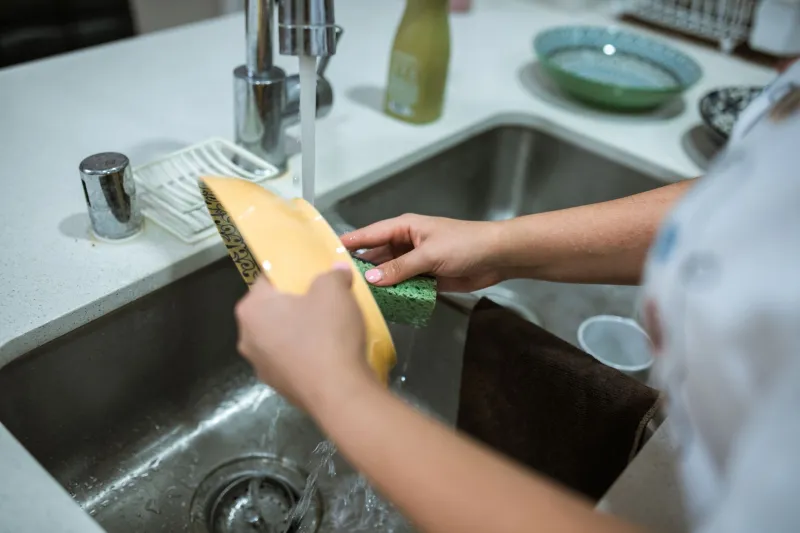
It sounds a bit mad. But researchers, therapists, and a quietly growing cohort of Brits who've sworn off their dishwashers are making a compelling case: hand-washing the dishes might be one of the most accessible mindfulness practices available to us. No app required. No retreat in the Cotswolds. Just warm water, a bit of Fairy Liquid, and your own two hands.
What the Science Actually Says
Back in 2015, a study from Florida State University found that participants who washed dishes mindfully — focusing deliberately on the feel of the warm water, the smell of the washing-up liquid, the texture of each plate — reported a 27% reduction in nervousness and a notable uptick in mental inspiration. The researchers called it "mindful dishwashing." The rest of us might just call it finally paying attention.
The key word there is mindfully. The difference between a stressful chore and a therapeutic ritual often comes down to intention and attention — two things that cost absolutely nothing.
Dr Sarah Holt, a clinical psychologist based in Bristol, explains it like this: "The sink is a brilliant anchor. You've got sensory input from all directions — temperature, texture, smell, the sound of running water. When you deliberately tune into those things instead of fighting them, you're essentially doing a body scan without calling it one. The brain genuinely can't tell the difference."
Warm water, in particular, plays a sneaky physiological role. Studies have linked warmth applied to the hands and wrists with a measurable reduction in cortisol — the stress hormone that keeps so many of us wired long after we should have wound down.
Why Britain Is Perfectly Placed to Embrace This
Let's be honest: the British relationship with a good cup of tea is really a relationship with ritual. The kettle goes on not just because someone's thirsty, but because the act of making tea provides a familiar, comforting structure in an otherwise chaotic day. Washing up operates on the same principle — it's a natural pause point, a transition between the busy business of eating and whatever comes next.
In a country where 74% of adults report feeling overwhelmed by stress at least once a week (according to the Mental Health Foundation), and where NHS waiting lists for talking therapies remain stubbornly long, accessible daily rituals matter enormously. The sink isn't glamorous. But it's there, every single day, waiting.
Marcus, a secondary school teacher from Leeds, started hand-washing his dishes deliberately after his therapist suggested incorporating more sensory grounding into his evenings. "I thought it was going to be pointless, honestly. But within a week I noticed I was sleeping better. I stopped going to bed with my mind still racing. The washing up became my full stop at the end of the day."
The Dishwasher Debate Nobody Asked For
To be clear — nobody's suggesting you throw out the dishwasher entirely (though some people are, and we'll get to that). The argument isn't anti-appliance. It's pro-choice. The idea is that occasionally opting to wash up by hand, and treating it as intentional rather than obligatory, can shift the entire experience.
Psychologist and author Dr Tara Swart has spoken about the importance of what she calls "analogue rituals" — offline, physical, repetitive tasks that give the prefrontal cortex a chance to rest while keeping the body gently occupied. Washing up fits this description almost perfectly. It's repetitive enough to be soothing, tactile enough to be grounding, and structured enough to feel satisfying when you're done.
Jade, a graphic designer from Birmingham who works entirely remotely, deliberately does her washing up without her phone nearby. "My whole job is screens. By the time dinner's done, my eyes are cooked. Doing the dishes has become the one part of my evening where nothing is demanding anything from me. It sounds tragic but it's genuinely the most peaceful fifteen minutes of my day."
How to Actually Do It (Without It Feeling Like Homework)
The good news: you already know how to wash dishes. The mindfulness bit is just a small reframe. Here's what the research and practitioners suggest:
Slow down on purpose. Resist the urge to rush through the pile. Each item gets your full, unhurried attention.
Notice the water temperature. Is it warm? Hot? Feel it change as you rinse. This sensory anchoring is the whole game.
Breathe with the rhythm. Match slow, deliberate breaths to the pace of washing. In through the nose as you scrub, out as you rinse.
No podcasts, no music, no phone propped up on the windowsill. At least some of the time. The silence is the point.
Let your thoughts drift without following them. This is the bit that takes practice — noticing a thought about tomorrow's meeting and gently returning your attention to the plate in your hand.
A Wellness Practice Even the NHS Might Approve Of
Mindfulness-based cognitive therapy (MBCT) is already recommended by NICE guidelines for preventing depression relapse. The core principles — present-moment awareness, sensory grounding, non-judgmental attention — are precisely what mindful dishwashing taps into. It won't replace professional support for those who need it. But as a daily maintenance practice for the rest of us, it's surprisingly well-aligned with evidence-based approaches.
The beauty of it, of course, is the zero barrier to entry. No membership fee. No waiting list. No need to sit cross-legged on a mat while someone tells you to visualise a forest. Just you, a bowl of warm soapy water, and the revolutionary act of paying attention to what's right in front of you.
The sink has been waiting. It might be time to meet it properly.