Paws, Parks and People: The Four-Legged Secret to Britain's Loneliness Problem
The Friendship Problem Nobody Wants to Talk About
Making friends as an adult in Britain is, to put it diplomatically, a bit of a nightmare. The structures that once made it easy — school, university, the office — either disappear entirely or become increasingly awkward as the years tick by. Organised social events feel forced. Neighbourhood apps are mostly people complaining about parking. And the idea of simply approaching a stranger to suggest friendship is, for most Brits, roughly as appealing as a cold shower in January.
And yet, every single morning and evening, something extraordinary is quietly happening in parks, on commons, and along canal towpaths across the country. Dog owners — bleary-eyed, wellies on, poo bag in hand — are accidentally solving the adult friendship crisis one wagging tail at a time.
The Accidental Social Network
There's a reason the dog park works when almost everything else doesn't: it removes the awkward bit entirely.
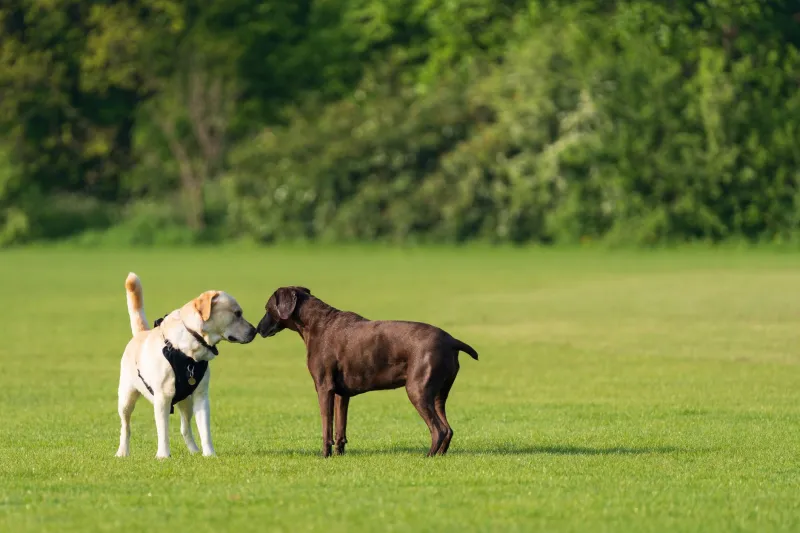
When two people meet with dogs in tow, the conversation starter is already sorted. You're not approaching a stranger — you're responding to a dog. The animal does the social heavy lifting. Questions about breed, age, and name flow naturally. Before anyone has had to consciously try, a genuine human exchange has taken place.
"Dogs are the ultimate social lubricant," says Dr Katy Sherwood, a social psychologist at the University of Exeter. "They create what we call a 'third party anchor' — a shared point of interest that takes the pressure off two people having to perform friendship at each other. It makes the interaction feel low-stakes, which is precisely when authentic connection is most likely to happen."
This isn't just theory. A 2019 study published in PLOS ONE found that dog owners were significantly more likely to know their neighbours and to have received social support from people they'd met through their dogs. In the UK context — where only 53% of adults say they have someone they could turn to in a crisis, according to the British Red Cross — that's not a trivial finding.
The Regulars Effect
Anyone who walks a dog at the same time each day will know about the Regulars — that loose, informal crew of fellow walkers whose names you may not know, but whose dogs you absolutely do. There's the border collie who goes absolutely berserk for tennis balls. The ancient, waddling basset hound whose owner always has a thermos. The excitable dachshund puppy who thinks every other dog is its best friend.
This sort of repeated, low-pressure social contact is exactly what researchers studying loneliness have identified as foundational to wellbeing. You don't need deep, intimate friendship to feel socially connected — you need familiar faces, the sense that you are known and seen in your community. Dog parks deliver this in spades.
Naomi, 41, moved to Sheffield during the pandemic and initially knew nobody. "I got a dog partly out of loneliness, if I'm honest. Within three months I had a whole social world built around morning walks in Endcliffe Park. There are six of us who go for coffee together now on Saturdays. I genuinely don't know what I'd have done without Biscuit — the dog and, well, the biscuits."
The Health Numbers Behind the Wagging Tails
The benefits extend well beyond the social. Regular dog walking — most owners manage at least 22 minutes of moderate activity a day, according to research from the University of Liverpool — contributes meaningfully to physical health targets. But it's the mental health data that's particularly striking.
A 2020 study from the Mental Health Foundation found that 48% of dog owners reported that their pet had helped them cope during periods of stress. Separate research from the University of York found that maintaining social routines with pets during lockdown was one of the strongest predictors of mental health resilience.
GP Dr James Okafor, who practises in Manchester, has started informally recommending dog walking groups to patients presenting with mild to moderate depression. "I can't prescribe a dog, obviously. But I can absolutely recommend that people use their existing walking routines more intentionally — stopping to chat, joining the regulars, being present rather than just getting the steps in. It's social prescribing in its most organic form."
The Surprising Inclusivity of the Dog Park
One of the things that makes the dog park unusual as a social space is how genuinely mixed it tends to be. Age, background, profession — none of it gets signposted in the way it might at, say, a networking event or a fitness class. A retired headteacher and a 22-year-old apprentice can have a perfectly lovely fifteen-minute conversation about their respective spaniels without any of the social sorting that usually occurs between strangers.
Research into what sociologists call "weak ties" — the casual acquaintances who sit outside our close friendship circles — consistently finds that these relationships are disproportionately valuable to our wellbeing and even our career prospects. Dog parks are, in effect, weak-tie factories. And Britain has a lot of them.
There are an estimated 13 million dogs in the UK. That's 13 million daily reasons for their owners to leave the house, interact with strangers, and feel like part of a community. At a time when the government's loneliness strategy is still struggling to gain meaningful traction, the humble dog walk might be doing more practical work than any policy paper.
You Don't Even Need a Dog
This is perhaps the most liberating finding of all: the social benefits of the dog park aren't entirely restricted to dog owners. Plenty of regulars — dog-free neighbours, people whose own dogs have passed, grandparents accompanying grandchildren — find themselves welcomed into the fold anyway.
The dogs, bless them, don't check credentials.
So whether you've got a retriever, a rescue mutt, or absolutely nothing canine to your name — the park is still out there. The Regulars are still gathering. And the most natural social network Britain has ever accidentally built is still very much open for business, rain or shine.
Usually rain, let's be honest. But still.