Live in a Tall Terrace? Your House Is Secretly a Personal Trainer
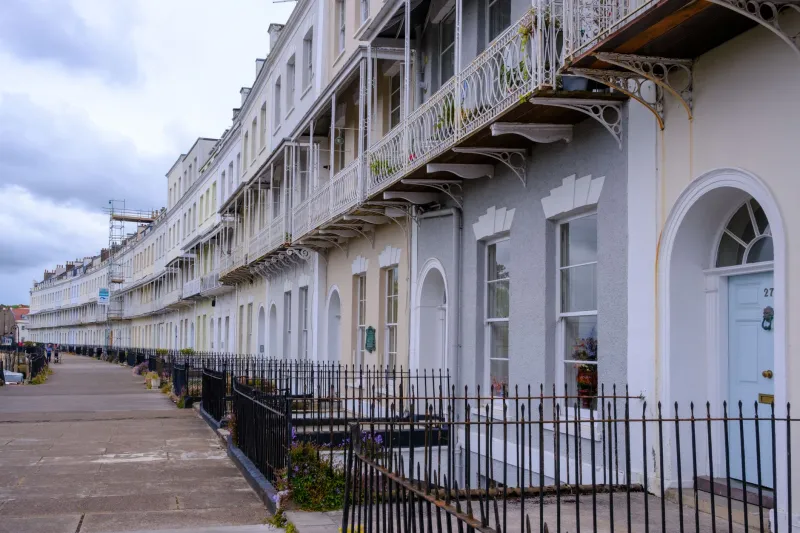
You've moaned about the stairs. You've cursed the steep steps every time you've lugged a laundry basket up to the third floor. You've probably even Googled 'Victorian house layout problems' at least once. But here's the plot twist: that tall, slightly impractical Georgian or Edwardian terrace you call home might be doing more for your fitness than a gym membership you barely use.
Britain has millions of period properties — tall, narrow, multi-storey homes built in an era when lifts weren't an option and people simply climbed. And movement coaches, physiotherapists, and exercise scientists are starting to pay very close attention to what all that daily climbing, squeezing, and stretching is doing to the bodies of the people who live in them.
The Staircase as Cardio Machine
Let's start with the obvious. Stairs are brilliant for you — and steep, narrow Victorian stairs are especially brilliant, even if they feel slightly terrifying when you're carrying a cup of tea.
"Every time you climb a flight of stairs, you're performing a functional lower-body workout," says Leeds-based physiotherapist Priya Nair. "You're loading your glutes, your quads, your calves — all the muscles that keep you upright and mobile as you age. The steeper the staircase, the greater the range of motion at the hip and knee, which means more muscle engagement per step."
The average Victorian terrace has at least two flights of stairs, often more. If you're making five or six trips up and down per day — which is entirely realistic if you live across multiple floors — that's the equivalent of a solid lower-body session, spread across the day in manageable chunks. No lycra required.
Research published in the British Journal of Sports Medicine has shown that stair climbing raises heart rate more efficiently than flat walking, improves cardiovascular endurance, and even has measurable benefits for bone density. Your house, essentially, is prescribing you cardio.
Narrow Hallways and the Forgotten Art of Body Awareness
Here's something your modern new-build neighbour is missing out on: spatial constraint. Period homes are famously snug. Hallways that require you to turn sideways with a pushchair. Door frames you instinctively duck through. Kitchens where two people cooking simultaneously is basically a contact sport.
This might sound like a design flaw. Movement coach and Pilates instructor Gemma Okafor, based in Bristol, sees it differently.
"Navigating a tight space constantly trains proprioception — your body's awareness of where it is in space," she explains. "People who live in more confined, older homes tend to have better body awareness and balance simply because their environment demands it every single day. You can't switch off and lumber through a narrow Victorian hallway. You have to be present in your body."
That heightened body awareness has real implications for injury prevention, better posture, and even stress reduction. Your cramped but characterful home is quietly teaching you to move more mindfully.
The Micro-Workout You're Already Doing
Beyond the stairs, period properties are full of accidental exercise opportunities that most residents don't consciously clock. Here are a few you might already be doing — and how to lean into them deliberately.
The Loft Hatch Reach: Stretching overhead to access a high shelf, a loft hatch, or those high Victorian picture rails engages your thoracic spine and shoulder mobility. Try pausing at full extension for three seconds next time. Instant mobility work.
The Cellar Squat: Many Georgian and Victorian homes have cellar steps — often shorter, steeper, and more demanding than regular stairs. Descending slowly and under control is a genuine eccentric quad exercise. Take it slowly and you're essentially doing a single-leg squat workout.
The Bay Window Lunge: Got a deep bay window with a wide sill? Stepping up onto it to open sash windows (a very real, very British daily activity) is a functional step-up exercise. Do it on both sides. Your hips will thank you.
The Sash Window Press: Pushing up a stiff sash window requires genuine upper body effort. If yours is particularly stubborn, you're getting an improvised overhead press. Every time.
Making It Intentional
The real magic happens when you stop treating your home's quirks as inconveniences and start treating them as equipment. Gemma suggests building what she calls 'threshold habits' — tiny intentional movement moments tied to the things you already do.
"Every time you pass through the kitchen doorway, do three calf raises. Every time you go upstairs, slow down and feel each step. Every time you reach for something high, stretch a little further and hold it," she says. "It sounds almost too simple, but these micro-moments of movement compound over a day, a week, a year."
Priya agrees, adding that for older adults in particular, the functional movement demands of a multi-storey period home can be genuinely protective. "I see patients in their seventies and eighties who've lived in tall terraces their whole lives and have remarkable lower-body strength and balance. The house kept them moving without them ever thinking of it as exercise."
The New-Build Problem
It's worth noting what this means for the flip side. Single-storey properties and open-plan new-builds — increasingly common across the UK — strip out most of these incidental movement opportunities. Everything is accessible, everything is flat, everything is easy. Which sounds lovely until you realise that 'easy' and 'good for your body' are not the same thing.
None of this is an argument against accessible housing — which is vital and necessary. But it is an argument for finding ways to reintroduce movement into homes that have engineered it out. If you live somewhere flat and modern, you might need to be more deliberate: a balance board in the kitchen, a pull-up bar in a doorframe, a deliberate daily walk to replace what your Victorian neighbours get for free.
Your Home Is Already Doing the Work
So next time you're muttering about the stairs, or squeezing past your partner in the narrow hallway, or hauling yourself up to the top floor to retrieve something you forgot — try to feel a tiny bit grateful. Your draughty, characterful, slightly impractical period home is one of the best pieces of fitness equipment you'll ever own.
And unlike a rowing machine, it doubles as a lovely place to live.