Shelf Care: The Science Behind Why Independent Bookshops Are Britain's Newest Mental Health Havens
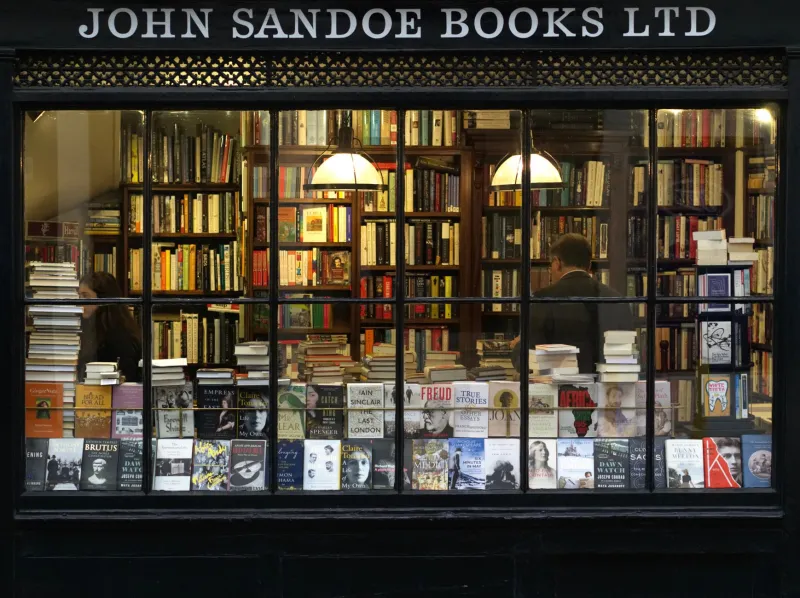
There's a particular kind of quiet that exists only inside independent bookshops. It's not the hush of a library — it's warmer than that. There's the faint creak of wooden floorboards, the papery scent of old and new stories stacked side by side, and the low murmur of someone asking a bookseller for a recommendation. It turns out this sensory cocktail isn't just pleasant. According to emerging research, it might actually be recalibrating your nervous system in real time.
Welcome to the era of bibliotherapy's physical cousin — call it shelf care, if you like.
The Science of Slowing Down Among the Shelves
Researchers studying stress responses have long known that certain environments trigger what's called the parasympathetic nervous system — the body's 'rest and digest' mode, which counteracts the fight-or-flight response that modern life keeps rudely activating. Natural settings, quiet spaces, and environments with low unpredictability all tend to nudge us in that direction.
Bookshops, it turns out, tick every single box.
Dr Felicity Hurst, a cognitive neuroscientist based in Edinburgh, has been quietly building a case for what she calls 'low-stimulation discovery environments.' Her preliminary work, shared at a wellbeing symposium earlier this year, found that participants who spent 20 minutes browsing a physical bookshop showed measurably reduced cortisol levels compared to those who spent the same time scrolling an online retailer.
"The key difference is unpredictability without threat," she explains. "When you browse a physical shelf, your brain is engaged but not overwhelmed. You're making micro-decisions constantly — picking things up, reading a blurb, putting it back — and each one delivers a tiny hit of dopamine. It's genuinely pleasurable neurological activity, and it happens at a pace that doesn't spike your stress hormones."
Netflix, she notes, operates very differently. "Infinite scroll is designed to keep you choosing without ever feeling satisfied. A bookshop has edges. You reach the end of a shelf and you feel a kind of completeness. That matters more than we realise."
The Regulars Who Know Something We Don't
Ask any independent bookseller in Britain and they'll tell you — they've always known their shops were doing something more than shifting stock.
Marcus Webb has run Pages & Co, a small independent in Stroud, for eleven years. He started noticing a pattern about three years ago. "We have a handful of regulars who come in every single week," he says. "They don't always buy anything. They browse, they chat, they sit in the corner armchair for a bit. One woman told me straight out — she comes here instead of going to her therapist when she's having a low week. She said it costs less and works just as well."
He's not alone in noticing this shift. Sally Dempsey, who runs Inkwell Books in Hebden Bridge, says her shop has become what she describes as "an informal drop-in centre that just happens to smell of paper." During the cost-of-living squeeze, she's seen a marked uptick in people lingering longer than they used to. "People need somewhere to be that isn't their house and isn't a pub," she says. "We're warm, we're quiet, we don't rush anyone, and nobody has to buy anything. I think that's quite radical, actually."
Why Touch Is the Thing Apps Can Never Replicate
There's a specific neurological phenomenon at play when you pick up a physical book — and it's one that digital retail simply cannot reproduce. Haptic feedback, the sensory information your brain receives through touch, plays a significant role in grounding us in the present moment. The weight of a hardback, the texture of a matte cover, even the resistance of a stiff spine — all of it sends signals to your brain that anchor you in your body.
This is particularly significant for people who experience anxiety, which so often manifests as a sense of disconnection or racing thought spirals. Tactile engagement pulls you back.
"There's a reason so many grounding techniques used in therapy involve touch," says Dr Hurst. "Holding something physical and real is an incredibly effective way to interrupt an anxious thought pattern. A bookshop essentially offers you dozens of opportunities to do exactly that, completely naturally, without anyone telling you it's a therapeutic exercise."
It also helps that the entire experience is mercifully free of notifications.
The Bookshop as Third Space
Urban sociologists have long championed the concept of the 'third space' — somewhere that is neither home nor work, where social bonds form and individual wellbeing quietly flourishes. Pubs used to dominate this category in Britain. Community centres still hold ground. But as high streets have hollowed out and digital life has consumed our attention, genuine third spaces have become rarer and more precious.
Independent bookshops, many of which have survived against considerable odds, are increasingly filling that gap. They're accessible without requiring a purchase, socially comfortable without demanding conversation, and stimulating without being overwhelming. For a generation navigating burnout, loneliness, and screen fatigue, that combination is, frankly, revolutionary.
The Booksellers Association has reported a steady increase in independent bookshop openings over the past five years — a trend that runs stubbornly counter to the broader retail collapse on British high streets. Perhaps the nation, on some collective instinctive level, already knew what the neuroscientists are only now confirming.
Your Prescription, Should You Choose to Accept It
You don't need a referral. You don't need a diagnosis. You don't need to spend a penny, though you absolutely might — and honestly, supporting your local indie is its own kind of feel-good medicine.
Next time the anxiety creeps in or the week feels like it's sitting on your chest, skip the doom-scroll and find your nearest independent bookshop. Wander in. Pick things up. Read a first page. Put it back. Pick up another one. Let your nervous system remember what it feels like to be curious without consequence.
Turns out the best things in life really are found on shelves.