Roast Revelation: Why Your Sunday Dinner Is Actually One of Britain's Most Powerful Anti-Inflammatory Meals
There's a peculiar irony unfolding in British nutrition right now. While wellness influencers hawk turmeric lattes and adaptogen supplements, and while glossy magazines devote entire features to the anti-inflammatory properties of obscure Andean grains, a genuinely powerful anti-inflammatory meal has been sitting on British tables every Sunday for centuries.
The roast dinner. Derided by clean-eating culture. Overlooked by the wellness industry. And, it turns out, rather impressively good for you — if you know what you're looking at.
Let's take it apart.
The Bone That Keeps on Giving
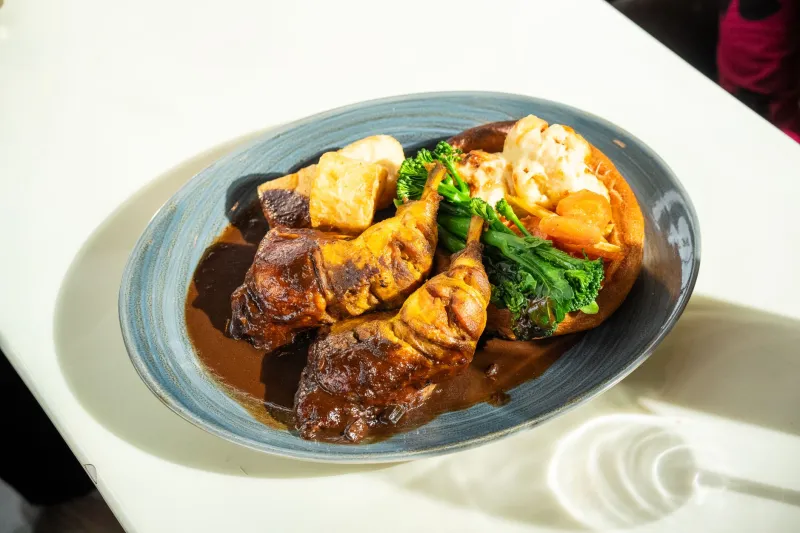
Start with the centrepiece: the joint. Whether it's a leg of lamb, a chicken, a rolled silverside or a pork shoulder, slow-roasted bone-in meat is doing something nutritionally significant that a chicken breast from a meal prep box simply cannot replicate.
When connective tissue — tendons, cartilage, skin — breaks down slowly in a hot oven, it releases collagen. That collagen degrades into gelatin and collagen peptides, which have been the subject of considerable research interest over the past decade. Studies published in journals including the British Journal of Sports Medicine and Nutrients have found that dietary collagen peptides support joint health, improve skin elasticity and — most relevantly here — may play a role in reducing markers of systemic inflammation.
"The slow-cooking method is key," explains registered nutritionist Fiona Trent. "High heat, fast cooking destroys a lot of the collagen structure. But a joint that's been in the oven for three hours at a lower temperature? You're getting a meaningful amount of bioavailable collagen peptides in the meat itself, and even more if you use the bones for gravy or stock."
That gravy, incidentally, is not the dietary villain it's been painted as — particularly when made from proper meat juices and bones rather than a granule packet. Bone-based gravy is effectively a diluted bone broth, and bone broth has become one of the more credibly researched foods in the anti-inflammatory nutrition space, containing glycine, proline and hydroxyproline — amino acids with documented anti-inflammatory properties.
The Root Vegetable Renaissance
Now the veg. The traditional Sunday roast plate typically features a combination that reads, from a nutritional standpoint, like a very deliberate anti-inflammatory selection: carrots, parsnips, swede, onions, and potatoes — often joined by Brussels sprouts, broccoli, cabbage or green beans.
Carrots are rich in beta-carotene, which the body converts to vitamin A — a key regulator of immune function and inflammatory response. Parsnips contain polyacetylenes, compounds that have demonstrated anti-inflammatory effects in laboratory studies. Onions are loaded with quercetin, one of the most studied natural flavonoids for its capacity to inhibit inflammatory pathways.
Brussels sprouts, so often the comedy villain of the Christmas table, deserve particular rehabilitation. They're extraordinarily rich in glucosinolates, which break down into compounds including sulforaphane — a molecule that has been shown to suppress NF-κB, a protein complex that acts as a kind of master switch for inflammatory gene expression.
"If someone came to me and said they wanted to design an anti-inflammatory meal from scratch," says Dr Harriet Bloom, a nutritional scientist at the University of Leeds, "I'd probably end up with something that looked quite a lot like a Sunday roast. The traditional British vegetable repertoire is genuinely impressive from an anti-inflammatory standpoint. We just don't talk about it in those terms."
The roasting method matters here too. Roasting root vegetables concentrates their natural sugars and, crucially, preserves fat-soluble nutrients (like beta-carotene) far better than boiling, particularly when cooked in a small amount of fat — traditionally goose fat or beef dripping, both of which contain oleic acid, the same monounsaturated fat celebrated in olive oil.
Potatoes: The Wrongly Convicted
A brief word in defence of the roast potato, which has spent the past decade on nutritional death row thanks to the low-carb movement.
Potatoes are an excellent source of potassium — essential for blood pressure regulation — as well as vitamin C and vitamin B6. They contain resistant starch, particularly if cooled before reheating (which, let's be honest, describes every leftover roast potato in history), which feeds beneficial gut bacteria and supports the kind of microbiome diversity associated with reduced inflammation.
The potato is not the problem. The problem, nutritionists increasingly argue, is the broader dietary context — and a Sunday roast, eaten as a single weekly meal within a reasonably balanced diet, provides a context in which the potato performs very well indeed.
The Ingredient Nobody Lists: Ritual
Here's where the Sunday roast gets genuinely interesting from a health science perspective — and where it diverges most sharply from the meal-kit, eat-at-your-desk culture that's replaced it for many Brits.
The traditional Sunday roast is a meal with structure. It takes time to prepare. It's typically eaten at a table. It usually involves other people. And it happens at a predictable, recurring point in the week.
Each of these features, individually, has documented health benefits.
Shared meals have been consistently associated with improved mental health outcomes, greater dietary diversity, and lower rates of disordered eating. Research from Oxford University found that the frequency of family meals was a stronger predictor of adolescent wellbeing than almost any other single lifestyle variable studied.
Slow, distraction-free eating — the kind that happens when you're actually at a table with other people — improves digestion, supports satiety signalling (meaning you're less likely to overeat), and reduces cortisol levels associated with rushed or anxious eating.
And the predictability of a weekly ritual matters too. Chronobiological research — the study of how biological processes align with time — suggests that regular meal timing supports circadian rhythm stability, which in turn influences everything from sleep quality to immune function to metabolic health.
"We've spent years trying to optimise the nutrients in individual foods," says Dr Bloom. "But the context in which food is eaten — the social environment, the pace, the ritual — has a profound effect on how those nutrients are absorbed and metabolised. The Sunday roast gets all of those contextual factors right."
Britain's Heritage Foods Don't Need Reinventing
There's a tendency in wellness culture to assume that traditional food is naive and modern food is sophisticated. That the old ways need updating. That your grandparents' cooking was fine for its time, but science has moved on.
The emerging picture from nutritional research suggests something rather different: that many traditional food cultures — including Britain's own — developed, through centuries of accumulated wisdom, dietary patterns that align remarkably well with what we now understand about inflammation, gut health and metabolic function.
The Sunday roast doesn't need a rebrand. It doesn't need a cauliflower substitute or a grain-free pastry swap. It needs, perhaps, a little more respect — and a little less rushing.
So this Sunday, take your time with it. Use the bones. Don't skip the veg. Sit down. And eat with someone else if you possibly can.
Your inflammatory markers will thank you. And so, almost certainly, will your soul.