Run the Bath: Why Scientists Are Suddenly Very Excited About Britain's Most Overlooked Wellness Ritual
Run the Bath: Why Scientists Are Suddenly Very Excited About Britain's Most Overlooked Wellness Ritual
For a nation that has historically treated the evening bath as something between a birthright and a minor religion, Britain has been oddly slow to interrogate the science behind it. We run the bath. We get in. We feel better. We've never really asked why.
Well, the researchers have been asking — and what they're finding is, frankly, remarkable. The humble soak that your grandparents swore by, that you reach for instinctively after a particularly grim Monday, is turning out to be a genuinely powerful wellness tool. And the evidence is piling up fast enough that doctors are starting to take notice.
The Blood Pressure Bombshell
Let's start with the headline finding, because it's a big one. A study published in the journal Heart — following over 30,000 adults in Japan over a 20-year period — found that people who took a daily hot bath had a 28% lower risk of cardiovascular disease and a 26% lower risk of stroke compared to those who bathed less frequently.
That's not a modest association. That's a finding that, replicated in a pharmaceutical context, would have doctors prescribing something immediately.
More recently, researchers at the University of Oregon demonstrated that immersion in hot water — around 40°C — for 45 minutes produced significant reductions in blood pressure that persisted for hours after the bath ended. The mechanism? Heat causes blood vessels to dilate, improving circulation and reducing the resistance against which the heart must pump. It's essentially a passive cardiovascular workout, and your body is doing the heavy lifting while you lie there listening to Radio 4.
 Photo: University of Oregon, via images.adsttc.com
"The cardiovascular effects of regular warm bathing are genuinely clinically meaningful," says Dr. Anjali Patel, a cardiologist based in Birmingham. "We're not saying it replaces medication for people who need it. But as a complementary lifestyle intervention, particularly for people with mildly elevated blood pressure, the evidence is strong enough that I now actively discuss it with patients."
Sleep Like You Mean It
If the blood pressure data is compelling, the sleep research is almost unfairly good. A meta-analysis published in Sleep Medicine Reviews — examining data from 17 separate studies — found that taking a warm bath (40–42°C) between one and two hours before bedtime reduced the time it took to fall asleep by an average of ten minutes and improved overall sleep quality significantly.
The mechanism here is delightfully counterintuitive. Getting into a hot bath raises your core body temperature. When you get out, your temperature drops rapidly. That cooling effect mimics — and actually accelerates — the natural temperature drop that your body undergoes as it prepares for sleep. You're essentially tricking your circadian rhythm into thinking it's bedtime, in the most pleasant way imaginable.
For the millions of Brits who struggle with sleep — and NHS data suggests that's roughly a third of the adult population — this is genuinely useful information. Not a supplement. Not a gadget. Just a bath, timed correctly, at the right temperature.
"The timing is key," notes sleep researcher Dr. Tom Harding from the University of Leeds. "A bath right before bed can actually be counterproductive because your temperature hasn't had time to drop. The sweet spot is 90 minutes to two hours before you want to be asleep. That's when you get the maximum sleep-onset benefit."
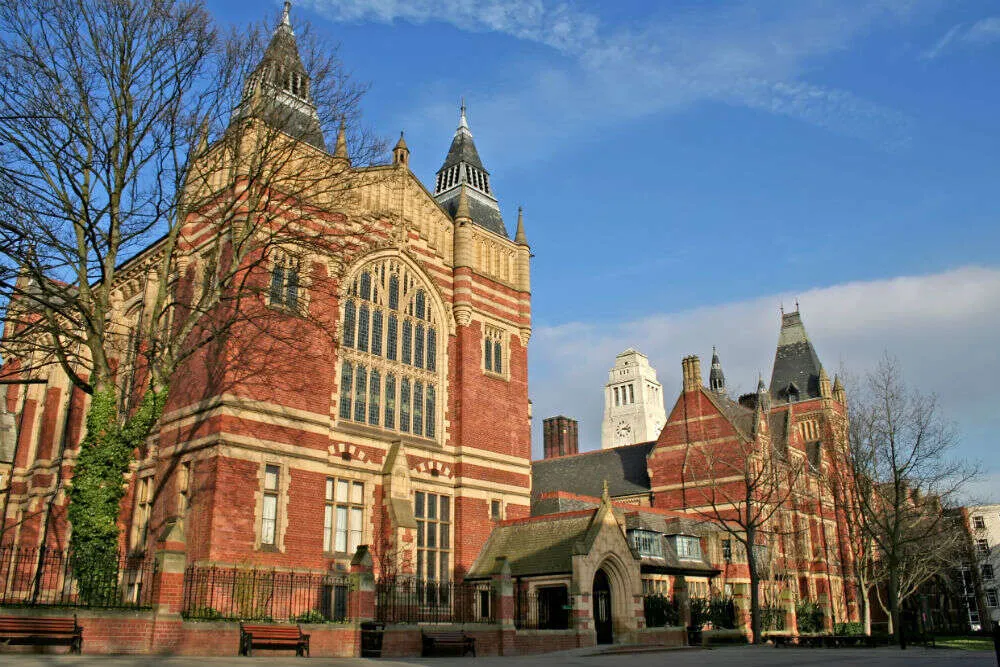 Photo: University of Leeds, via static.toiimg.com
The Anxiety Angle
The mental health data adds another compelling layer. A study from researchers at Freiburg University found that people with moderate depression who took two warm baths per week — sustained for eight weeks — reported mood improvements comparable to those seen with moderate aerobic exercise. Separate research has linked regular warm bathing to reduced cortisol levels, the body's primary stress hormone, and increased production of serotonin.
For a country that's been grappling seriously with anxiety and low-level depression since long before the pandemic made it a mainstream conversation, this is meaningful. The bath is accessible, affordable, private, and requires no particular skill or motivation beyond the ability to turn a tap. As mental health interventions go, that's a remarkably low barrier to entry.
"There's something profound about immersion," says Dr. Clara Osei, a clinical psychologist in London. "The warmth, the buoyancy, the sensory containment — it activates the parasympathetic nervous system in a very direct way. You're physiologically shifting out of fight-or-flight mode. That's not woo. That's neuroscience."
The Great British Bathroom: Wellness Sanctuary in Waiting
Here's the thing about Britain and baths: we have a cultural relationship with them that goes deeper than most countries. The Victorians built public bathhouses as civic institutions. Seaside towns built therapeutic spa culture around mineral waters. The phrase "I'm going to have a proper bath" carries a specific emotional weight in British English that "I'm going to take a shower" simply doesn't.
What the new science is doing is giving that cultural instinct a rigorous evidence base. Your bathroom — that slightly cramped, possibly-needs-regrouting room at the end of the hall — is, if used correctly, a legitimate health intervention space.
And it doesn't need to be expensive.
How to Actually Do This Properly
The good news is that optimising your soak requires very little. Here's what the evidence — and a growing number of GPs — actually recommends:
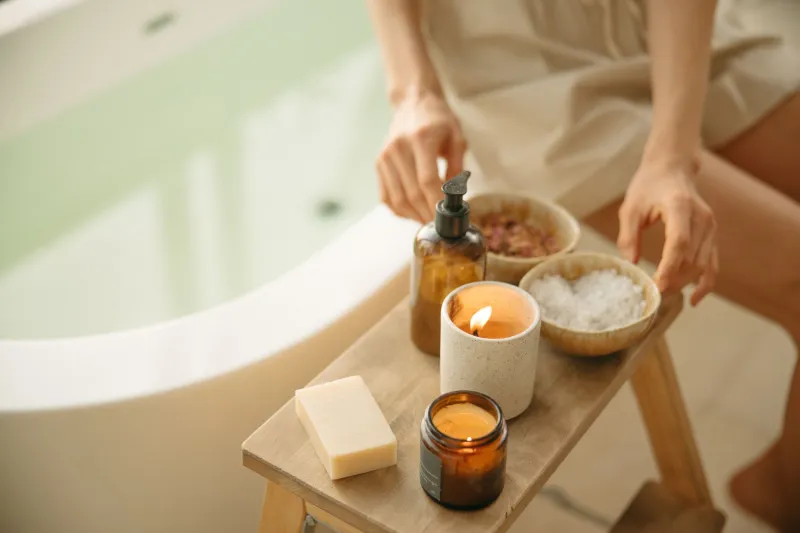
Temperature: Aim for 40–42°C. Hotter than this can cause dizziness and is counterproductive. Cooler than 38°C and you lose most of the cardiovascular and sleep benefits. A bath thermometer costs about £5 and is genuinely worth it.
Duration: 20–40 minutes appears to be the sweet spot in most studies. Long enough to get the physiological effects; not so long that you prune entirely and start questioning your life choices.
Timing: For sleep benefits, 90 minutes to two hours before bed. For blood pressure and general relaxation, any time of day provides benefit — though evening baths have the added sleep-onset advantage.
Epsom salts: The evidence here is less rock-solid than for heat alone, but magnesium absorption through the skin is a plausible mechanism, and many GPs are now comfortable recommending Epsom salt baths for muscle soreness and relaxation. A bag from the supermarket costs well under £3.
Lavender: A small but growing body of research supports the use of lavender essential oil — a few drops in the bath — as a genuine anxiolytic (anxiety-reducing) agent. The NHS's aromatherapy guidance acknowledges its relaxation benefits. It also makes the bathroom smell wonderful, which feels like a bonus worth having.
Lighting: Not strictly evidence-based, but dimming the lights or using candles during an evening bath supports the melatonin-friendly, low-stimulation environment your brain needs before sleep. Leave the phone outside the room.
The Bottom Line
Britain's wellness conversation has spent years chasing the exotic — cold plunges, infrared saunas, elaborate supplement stacks, biohacking gadgets that cost as much as a second-hand car. And here, the whole time, has been a cast-iron bath in a slightly draughty bathroom, quietly delivering cardiovascular protection, better sleep, and improved mood to anyone willing to run the hot tap.
Nan knew. The Victorians knew. The Japanese, apparently, have known for centuries.
Now the scientists know too.
Time to put the kettle on. And then run the bath.