What's Actually in Your Desk Drawer? The Snack Swap That Could End Your 3pm Slump for Good
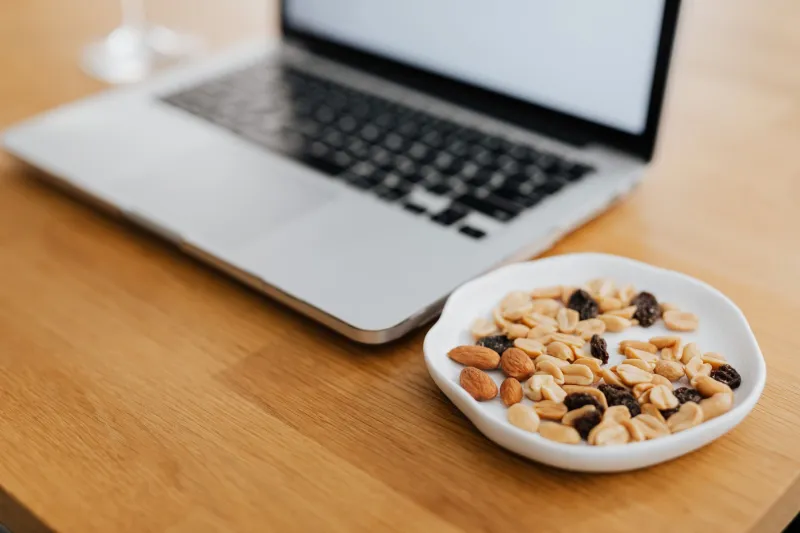
It happens to virtually every office worker in Britain. The clock ticks past three, the morning's caffeine has long since abandoned you, and suddenly the only thing standing between you and a full desk nap is a trip to the vending machine. A Kit Kat is procured. A second (or third) coffee is poured. And roughly forty minutes later, you feel even worse than before.
Sound familiar? You're not alone — and crucially, you're not weak-willed. You're just reaching for the wrong things.
The 3pm slump is a genuine physiological event, driven by a dip in your circadian rhythm and — more importantly — the blood sugar rollercoaster that most British workers unknowingly board every single morning. The good news? Your desk drawer, if stocked correctly, is a surprisingly powerful antidote. No expensive supplements, no wellness subscriptions, no elaborate meal prep required.
Why the Slump Happens in the First Place
Let's get briefly scientific, because it matters. When you eat something high in refined carbohydrates — a white-bread sandwich, a packet of crisps, a sugary yoghurt — your blood glucose spikes rapidly. Your pancreas floods the system with insulin to bring it back down. The problem is that "back down" often becomes "too far down," leaving you in a state of mild hypoglycaemia that your brain interprets as an emergency. Cue the fatigue, the brain fog, and the desperate craving for sugar or caffeine to claw your way back up.
Coffee, for all its charms, doesn't fix this. It masks it. The caffeine temporarily blocks adenosine receptors — the chemical that signals tiredness — but the blood sugar situation remains unresolved. When the caffeine wears off, you crash harder.
What actually works is preventing the spike in the first place, or slowing it down significantly. And that's where strategic snacking earns its moment in the spotlight.
The Humble Handful That Changes Everything
Nuts are, nutritionally speaking, something of a miracle desk snack. A small handful of almonds — roughly 23 nuts, if you're counting — delivers a combination of healthy fats, protein, and fibre that slows glucose absorption meaningfully. Research published in the European Journal of Nutrition found that replacing a high-carbohydrate snack with almonds significantly reduced post-meal blood sugar spikes in participants over a 12-week period.
Walnuts deserve a special mention here. Beyond their blood sugar credentials, they're one of the richest plant-based sources of omega-3 fatty acids, which have been linked to improved cognitive function and reduced afternoon mental fatigue. Basically, your brain runs better on them. A small portion kept in a resealable bag costs pennies per serving and takes up approximately no desk space.
Mixed seeds — pumpkin, sunflower, hemp — are similarly underrated. They're dense in magnesium, a mineral many Brits are quietly deficient in, and which plays a direct role in energy metabolism. Sprinkling them over a piece of fruit rather than eating either alone creates a snack with a much gentler glycaemic impact.
Fruit: The Complicated Relationship
Fruit gets unfairly maligned in some corners of the wellness world, but the reality is nuanced. Eating a banana on its own — particularly a very ripe one — does produce a reasonably quick glucose response. But pair that same banana with a tablespoon of almond butter or a small handful of cashews, and you've fundamentally changed how your body processes it. The fat and protein slow everything down.
Apples are arguably the desk worker's best friend. Their fibre content (particularly pectin, found in the skin) and moderate fructose levels make them one of the lower-glycaemic fruits available. An apple with a small wedge of cheese — a very British combination, it has to be said — is genuinely one of the most effective blood-sugar-stabilising snacks going.
Blueberries, meanwhile, are having a well-deserved moment. Compounds called anthocyanins, responsible for their deep colour, have been shown in multiple studies to improve insulin sensitivity over time. A small pot kept in the office fridge isn't just a snack — it's a long-term investment.
The Caffeine Trap (And How to Step Around It)
This isn't an anti-coffee piece. Coffee, in moderation, has genuine health merits and most of us are emotionally attached to it in ways that transcend science. But leaning on it as a primary energy management tool is where things go wrong.
If you must have an afternoon coffee, pairing it with a protein-rich snack rather than drinking it on an empty stomach dramatically reduces the cortisol spike it can trigger. A small pot of Greek yoghurt, a boiled egg (yes, you can absolutely keep these at your desk in a cool bag), or even a few oatcakes with hummus will do the job.
Better yet, try swapping one afternoon coffee for a green tea. It contains L-theanine, an amino acid that modulates the caffeine's stimulant effect, producing what many people describe as a calmer, more focused alertness without the subsequent crash. It sounds like wellness-speak, but the evidence behind it is solid.
Building Your Desk Drawer Arsenal
The beauty of this approach is its simplicity. You're not being asked to meal prep on Sundays or calculate macros. You're being asked to stock your desk drawer slightly more thoughtfully than you currently do.
A practical starter kit might look like this: a bag of mixed nuts and seeds, a jar of nut butter (single-serve sachets are widely available in UK supermarkets now), a stash of oatcakes, and a piece of fresh fruit grabbed on your morning commute. Total weekly cost: somewhere around a fiver, depending on what you buy.
The payoff? A genuine, sustained reduction in that horrible mid-afternoon fog. Better concentration in the final hours of the working day. Less reliance on caffeine. And the quiet satisfaction of having outsmarted the vending machine.
Your desk drawer has always been a storage solution. It's time it became a wellness tool.