Paws for Thought: The Surprising Health Data That's Got Scientists Barking Mad About Dog Walking
The Accidental Athletes Among Us
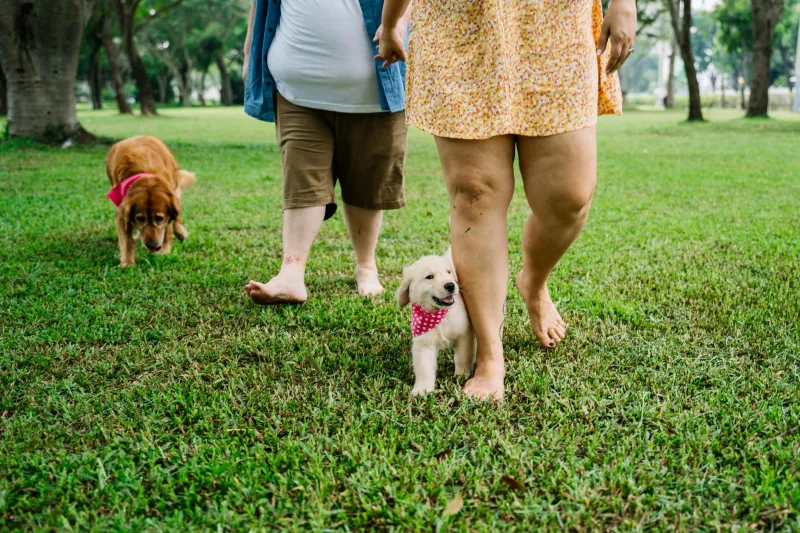
While Britain wrestles with obesity rates and mental health crises, there's a group of people quietly smashing health targets without even trying. They're not gym obsessives or wellness influencers – they're the slightly bedraggled folk you see trudging through your local park at 7 AM and 6 PM, plastic bags in hand, being dragged along by everything from tiny terriers to great galloping golden retrievers.
Turns out, Britain's dog walkers might just be the healthiest people in the country – and the data is starting to prove it.
The Numbers That'll Make You Want to Adopt Tomorrow
A comprehensive study tracking 5,000 adults across England over three years has thrown up some remarkable statistics that are getting public health experts very excited indeed. Dog owners, on average, clock up 22 minutes more physical activity per day than their pet-free counterparts. That might not sound like much, but it adds up to nearly three extra hours of movement per week.
More striking still are the cardiovascular benefits. Dog walkers showed 13% lower blood pressure readings, 11% better cholesterol profiles, and – here's the real kicker – 24% fewer GP visits for stress-related conditions.
Dr Amanda Foster from the University of Liverpool's Public Health Research Centre puts it bluntly: "We've been looking for magic bullets to improve population health for decades. Turns out, the answer might have four legs and a waggy tail."
 Photo: University of Liverpool, via www.n8equipment.org.uk
Beyond the Physical: The Mental Health Goldmine
But here's where things get really interesting. The same research revealed that dog ownership is linked to significantly lower rates of reported loneliness and social isolation – issues that cost the NHS an estimated £2.5 billion annually.
Dog walkers score an average of 18% better on standardised loneliness scales compared to non-pet owners. Why? Because walking a dog is essentially a social prescription that doesn't require a GP's referral.
"Dogs are natural conversation starters," explains Dr Michael Stevens, a social psychologist from Edinburgh University who's been studying pet-human interactions for over a decade. "You can't walk a dog without someone commenting on them, asking about their breed, or sharing stories about their own pets. It's forced socialisation for people who might otherwise go days without meaningful human contact."
 Photo: Edinburgh University, via images.squarespace-cdn.com
The mental health benefits extend beyond just social connection. The routine of daily walks provides structure, the outdoor time boosts vitamin D levels, and the responsibility of caring for another living being gives people a sense of purpose that's particularly valuable during difficult periods.
The NHS Takes Notice: Prescribing Paws
Some forward-thinking NHS trusts are already cottoning on to these benefits. In Yorkshire, the Dales Community Health Partnership has launched a pilot scheme called "Borrow a Dog," connecting isolated elderly patients with local dog owners who need walking volunteers.
"It started as a simple community initiative," says project coordinator Lisa Harper. "But after six months, we're seeing remarkable improvements in both physical mobility and mood scores among participants. One 78-year-old gentleman who hadn't left his house in months is now walking three miles daily with a borrowed border collie."
Similar schemes are popping up across the country. In Brighton, the local mental health trust partners with the RSPCA to offer "therapeutic dog walking" sessions for people dealing with anxiety and depression. Early results suggest participants show faster recovery rates than those receiving traditional talking therapies alone.
The Science of Structured Spontaneity
What makes dog walking such an effective health intervention is its unique combination of predictability and unpredictability. The routine is non-negotiable – dogs need walks regardless of weather, mood, or energy levels. This creates the kind of consistent exercise habit that fitness experts spend fortunes trying to instill in their clients.
Yet each walk is different. Dogs investigate new smells, chase unexpected squirrels, and meet other dogs, creating what researchers call "structured spontaneity" – planned activity with built-in variety that keeps the brain engaged.
Professor Janet Williams from Cardiff University's Exercise Science Department has been studying this phenomenon: "Traditional gym routines often fail because they become boring or feel like punishment. Dog walking never feels like exercise because it isn't really about you – it's about the dog's needs. That psychological shift is incredibly powerful."
The Cognitive Bonus Round
Perhaps most surprisingly, recent studies suggest that dog ownership might even help protect against cognitive decline in later life. Regular dog walkers over 65 show 12% better performance on memory tests and 15% better scores on attention and processing speed assessments.
The theory is that managing a dog's needs – remembering feeding times, recognising behavioural cues, navigating social interactions with other dog owners – provides exactly the kind of complex, real-world cognitive stimulation that keeps brains sharp.
Making It Work Without the Woof
Of course, not everyone can or should get a dog. Rental restrictions, allergies, work schedules, and financial constraints make pet ownership impossible for many people. But the research suggests there are ways to capture some of these benefits without full-time furry commitment.
Volunteering at local animal shelters often includes dog walking opportunities. Apps like "BorrowMyDoggy" connect pet owners with people who'd love regular dog contact without the full responsibility. Some areas even have "community dogs" – friendly local pups whose owners welcome additional walkers.
For those who prefer the solo approach, the key lessons from dog walking research can be applied to any regular outdoor routine: make it non-negotiable, vary the routes, and don't be afraid to chat with fellow walkers along the way.
The Future of Four-Legged Healthcare
As the evidence mounts, expect to see more integration between pet ownership and public health policy. Some councils are already considering "dog-friendly" urban planning that prioritises safe walking routes and off-lead areas.
There's even talk of "social prescribing" schemes that could include subsidised pet ownership for people dealing with chronic loneliness or mental health challenges.
The message is clear: in our increasingly sedentary, isolated world, sometimes the best medicine comes with a lead attached. Who knows? Your local rescue centre might just be Britain's most underutilised health resource.