Freezing Lakes and Feeling Fantastic: What Cold-Water Swimming Is Really Doing to British Brains
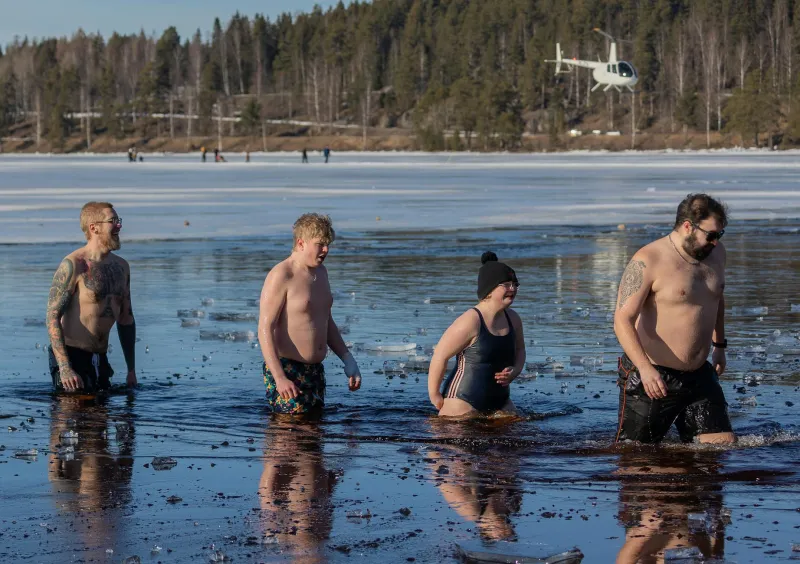
There's a particular kind of person you'll spot on a grey Tuesday morning in November, standing at the edge of a Cumbrian tarn in a costume and a woolly hat, grinning like they've just won the lottery. They're about to jump into water that's roughly the temperature of a well-chilled Sauvignon Blanc. And somehow — bafflingly — they can't wait.
Cold-water swimming has gone from niche hobby to full-blown British obsession over the past few years. The Outdoor Swimming Society estimates that millions of people now swim outdoors regularly in the UK, and anecdotal reports of transformed moods, reduced anxiety and a general sense of feeling more alive are everywhere. But what's actually going on beneath the surface?
The Science Bit (Don't Worry, It's Fascinating)
When your body hits cold water — and we're talking anything below about 15°C, which is basically every open body of water in Britain from September to June — it triggers what's known as the cold shock response. Your heart rate spikes, your breathing goes haywire for a few seconds, and your body floods with adrenaline and noradrenaline.
"That initial rush is a real physiological event," explains Dr Priya Mehta, a GP based in Bristol who has been recommending outdoor swimming to some of her patients. "The noradrenaline release in particular is significant — it's a neurotransmitter that plays a key role in mood regulation, focus and energy levels. You're essentially getting a natural neurochemical boost."
A landmark 2018 case study published in BMJ Case Reports documented a young woman whose severe depression improved dramatically after she began cold-water swimming — and was able to reduce her medication. More recently, researchers at the University of Portsmouth found that regular cold-water swimmers reported significantly lower levels of anxiety and better overall mood compared to non-swimmers. It's still early days for the research, and scientists are careful to stress that correlation isn't causation, but the signs are genuinely promising.
"It's Like a Reset Button for My Brain"
For many swimmers, the appeal goes beyond anything a journal paper could capture. Sarah Okafor, 41, from Manchester, started swimming in the Peak District reservoirs three years ago after struggling with burnout.
"I'd tried everything — meditation apps, therapy, yoga," she says. "Cold-water swimming was the first thing that made me feel present in my own body again. When you're in water that cold, you literally cannot think about your emails."
That enforced mindfulness is something sports scientist Dr James Whitfield, who lectures at Leeds Beckett University, finds particularly interesting. "There's a strong argument that cold immersion functions as a form of active mindfulness," he says. "You cannot ruminate when you're focused entirely on breathing through the cold. The mind is forced into the present moment in a way that's very hard to replicate sitting on a cushion."
The Community Factor: More Than Just a Dip
Here's something the research is only just starting to catch up with: the social dimension of wild swimming might be just as therapeutic as the cold itself.
Groups like the Bluetits Chill Swimmers — a community that now has chapters across the UK and beyond — have built genuine, warm (no pun intended) support networks around the shared experience of freezing their bits off together. Members describe the groups as non-judgemental spaces where age, body type and background simply don't matter.
"We have people who are recovering from cancer, people dealing with grief, new mums, people in their seventies," says Diane Fletcher, 55, who helps run a wild swimming group in County Durham. "The water brings you level. Everyone's equal when they're gasping in a cold river."
That sense of belonging and shared ritual — the post-swim flask of tea, the competitive moaning about the temperature, the collective euphoria — taps into something deeply human. And loneliness, as any GP will tell you, is one of the most significant drivers of poor mental health in Britain today.
A Few Honest Caveats
Now, in the spirit of keeping it real, it's worth noting that cold-water swimming isn't without risk — and the experts are unanimous on this point.
"Cold water incapacitation and cold shock are serious dangers, particularly for people with heart conditions or high blood pressure," Dr Mehta cautions. "Anyone with an underlying health condition should speak to their GP before starting. And nobody should ever swim alone in open water."
Dr Whitfield adds that while the mental health data is encouraging, it shouldn't be positioned as a replacement for clinical treatment. "It can be a brilliant complementary tool," he says, "but it's not a prescription. We need more robust, long-term studies before we start making bold claims."
The NHS also points out that open water carries risks including cold water shock, hidden currents and waterborne bacteria — so checking local guidance and swimming with a group or lifeguard presence is always the smart move.
So Should You Give It a Go?
If you've been curious about cold-water swimming — and given that you're reading this, there's a decent chance you have been — the evidence suggests it's well worth exploring, sensibly and safely. The combination of physiological stimulation, enforced presence and genuine community connection is a pretty compelling wellness package, and one that costs nothing more than a decent pair of neoprene gloves and the willingness to look slightly ridiculous on a cold morning.
Britain, after all, is practically designed for this. We have coastlines, rivers, lakes and lidos in abundance. We're already experts at cheerfully enduring terrible weather. And frankly, in a world of expensive wellness trends and overcrowded gyms, there's something wonderfully democratic about the idea that mental wellbeing might be waiting for you in a chilly Cornish cove or a misty Scottish loch.
Just maybe check the water temperature first. And bring a flask.
Always consult your GP before starting cold-water swimming, especially if you have any existing health conditions. Never swim alone in open water.