Harmony and Health: The GP Surgery That's Trading Pills for Pitch Perfect
The Prescription That Sounds Too Good to Be True
Dr. Sarah Mitchell was sceptical when her colleague first suggested it. "Prescribe choir practice? You're having a laugh," she remembers thinking. But six months later, the GP at Bramley Medical Centre in Leeds is singing a very different tune — quite literally.
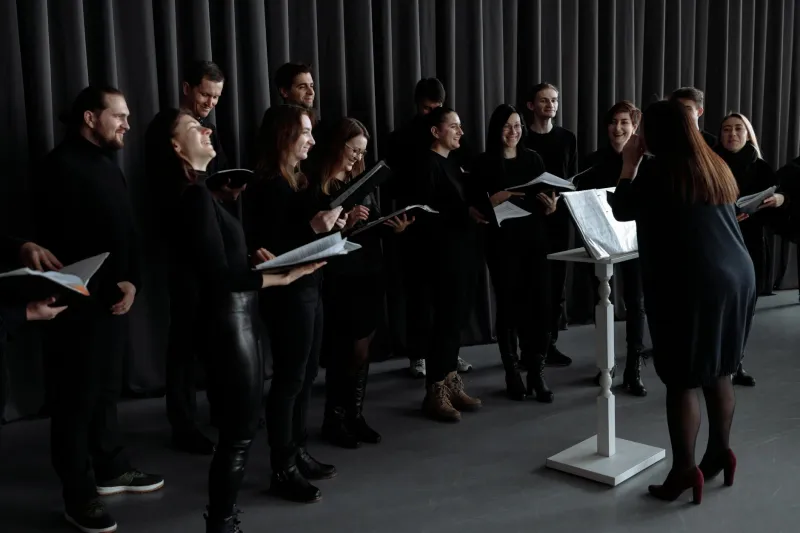
Her patient roster now includes dozens of people whose weekly dose of "medicine" involves gathering in the local community centre, warming up their vocal cords, and belting out everything from "Sweet Caroline" to "Jerusalem." The results? Reduced anxiety medication requests, fewer chronic pain complaints, and something Dr. Mitchell hadn't expected: patients actually looking forward to their follow-up appointments.
"I've got a 73-year-old gentleman who came to me with crippling loneliness after his wife passed," she explains. "Six months of choir practice later, he's organising the Christmas concert and hasn't mentioned his sleeping tablets once."
The Science Behind the Song
It turns out Dr. Mitchell's anecdotal observations are backed by increasingly robust research. A landmark study from Canterbury Christ Church University tracked 375 choir members across Kent and found that regular singing reduced cortisol levels by an average of 23% — comparable to results seen with some antidepressant medications.
But here's where it gets really interesting: the benefits extend far beyond stress hormones. Professor Helen Odell-Miller, who led the research, discovered that choir participants showed measurable improvements in chronic pain management, with 68% reporting reduced reliance on painkillers within three months of joining.
"When we sing in harmony with others, we're literally synchronising our nervous systems," explains Professor Odell-Miller. "Your heart rate aligns with the group, your breathing deepens, and your brain releases a cocktail of feel-good chemicals that pharmaceutical companies spend billions trying to replicate."
The mechanism is fascinatingly simple: group singing triggers the release of endorphins, oxytocin (the "bonding hormone"), and dopamine whilst simultaneously lowering cortisol. It's like getting a hug, a workout, and a therapy session all wrapped up in a three-part harmony.
From Prescription Pad to Playlist
Across the UK, forward-thinking healthcare providers are taking notice. The Bromley by Bow Health Partnership in East London now runs five different community choirs, each tailored to specific demographics — from new mums dealing with postnatal depression to refugees seeking connection in their adopted homeland.
"We've got waiting lists for our choirs now," laughs community coordinator James Wright. "When did you last hear of people queuing up for healthcare?"
The NHS Foundation Trust in Rotherham has gone one step further, employing a full-time "singing practitioner" whose job involves matching patients with appropriate choirs across South Yorkshire. Early results are so promising that three neighbouring trusts are planning similar programmes.
Meanwhile, in rural Scotland, GP Dr. Fiona MacLeod has partnered with local churches to create "prescription choirs" — informal singing groups specifically designed for people dealing with depression, anxiety, or chronic illness.
"The beautiful thing about singing is that it meets people where they are," she notes. "You don't need to be Pavarotti. You just need to turn up and make a noise with other humans."
Real Voices, Real Changes
Take Margaret Thompson from Wigan, who joined the Pennine Community Choir after her GP suggested it might help with her fibromyalgia. "I thought she'd lost her marbles," Margaret admits. "But desperate times and all that."
Eighteen months later, Margaret has reduced her pain medication by half and serves as the choir's unofficial social secretary. "It's not that the pain's gone," she explains, "but it doesn't define my week anymore. Tuesday nights are mine."
Or consider David Chen, a 45-year-old accountant from Bristol who joined a men's choir after his divorce left him isolated and anxious. "I hadn't sung since school assembly," he recalls. "But blokes supporting blokes through music? It works in ways that sitting in a circle talking never could for me."
Finding Your Voice (And Your Choir)
Intrigued but don't know where to start? The good news is that community choirs are everywhere — you just need to know where to look.
Your local library often hosts choir information, and many community centres run free taster sessions. The Natural Voice Network maintains a searchable database of non-audition choirs across the UK, whilst apps like Meetup frequently list local singing groups.
Many councils now fund community choirs as part of their public health initiatives, meaning fees are often minimal — typically £3-8 per session, with many offering sliding scales for those on benefits.
"The barrier to entry is beautifully low," notes choir leader Susan Davies, who runs groups across Manchester. "You don't need equipment, special clothes, or even the ability to carry a tune. You just need the willingness to make noise with strangers who quickly become friends."
The Harmony Prescription
As the evidence mounts and more healthcare providers embrace musical medicine, one thing becomes clear: the humble community choir might be one of Britain's best-kept health secrets.
Dr. Mitchell, the once-sceptical Leeds GP, puts it perfectly: "I can prescribe pills that might make you feel better, or I can prescribe an experience that will definitely make you feel connected. Which would you choose?"
With NHS budgets stretched and mental health waiting lists growing, perhaps it's time we all considered the prescription that costs pennies but pays dividends in harmony — quite literally.