Plot Neighbours, Life Friends: How Britain's Allotments Are Quietly Curing Loneliness
It started with a courgette. Margaret, 71, had grown far too many — as allotment holders inevitably do — and didn't know what to do with the surplus. Her plot neighbour, Tariq, who'd taken on his first allotment after moving to Sheffield from Pakistan three years earlier, mentioned offhand that his mother made a particular curry with them back home. Two weeks later, Margaret knocked on his gate with a notepad. By the end of the season, they were cooking together every Sunday.
"I hadn't had a proper friend in years," Margaret tells us, laughing slightly at the admission. "Not a new one, anyway. And now I've got Tariq and his whole family. All because of a vegetable I planted too many of."
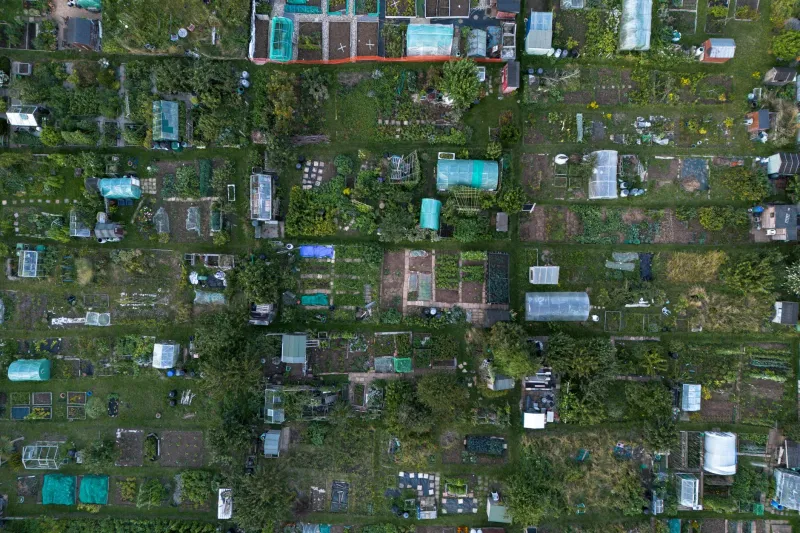
This is not a rare story. Across Britain's estimated 330,000 allotment plots, versions of this tale are playing out constantly — quiet, unplanned connections forming between people who might never have crossed paths otherwise. And as the country grapples with what health officials have called a loneliness epidemic, the humble allotment is emerging as one of the most effective — and most overlooked — community-building tools we have.
The Numbers Behind the Loneliness Crisis
Before we get back to the mud and the courgettes, it's worth pausing on the scale of what we're dealing with. According to the Campaign to End Loneliness, around 3.83 million people in the UK are chronically lonely. The NHS has been investing in social prescribing — connecting patients with community activities rather than just medication — precisely because loneliness has measurable impacts on physical health, comparable in risk to smoking 15 cigarettes a day.
GPs across England are increasingly referring isolated patients to community gardening schemes and allotment groups. The evidence base is growing, and it's compelling.
"Allotments tick almost every box for what we know reduces loneliness," says Dr Aisha Patel, a GP in Birmingham who has been referring patients to local growing schemes for three years. "There's a shared purpose, a reason to show up regularly, a low-pressure social environment, and a genuine sense of achievement. People don't go there to socialise — they go to grow things — and the friendships happen naturally as a result. That's often the most sustainable kind."
Why the Allotment Works When Other Interventions Don't
Social prescribing schemes sometimes struggle with uptake. Coffee mornings can feel forced. Community centres can be intimidating. But the allotment has a built-in solution to the awkwardness problem: you always have something to do.
"When you're doing something with your hands, conversation flows completely differently," explains Dr Rachel Simmons, a social psychologist at the University of Exeter who has been studying community gardening groups. "You're side by side rather than face to face, which removes a lot of the social pressure. You're talking about the beans or the weather or the soil, not about yourself. For people who find direct socialising difficult — which includes a huge proportion of lonely people — that's enormously liberating."
There's also the rhythm of the allotment season, which creates natural, recurring reasons to engage. You show up in March to plant. You show up in July to harvest. You show up in November to put the beds to rest. And every time, your neighbours are there too.
New to the Country, New to the Plot
For people who've recently arrived in the UK, allotments are proving to be a particularly powerful point of connection. Fatima, who moved from Morocco to Bristol four years ago, describes her first allotment season as transformative.
"I was very isolated. My English was improving but it wasn't confident. I didn't know how to start conversations," she says. "At the allotment, people would just come over and ask about my plants. They'd show me how they did things. I'd show them how I did things. It wasn't about language — it was about the growing."
Fatima now runs informal herb-growing workshops at her site, sharing knowledge of plants common in North African cooking that most of her plot neighbours had never grown before. "Now they all want za'atar and harissa peppers," she laughs. "I've made real friends. People I trust."
This knowledge exchange is a recurring theme. Allotments function as living libraries of agricultural wisdom — and that wisdom flows in every direction. Older plot holders share decades of hard-won growing knowledge. Newer arrivals introduce varieties and techniques that expand everyone's horizons. The exchange is mutual, and mutuality is the bedrock of genuine friendship.
The Older Adult Dividend
For older adults — particularly those who've been widowed or retired and lost the daily social structures that work provides — allotments can be nothing short of life-changing.
Ron, 78, took on an allotment in Nottingham two years after his wife passed away. "I wasn't coping," he says simply. "I wasn't leaving the house much. My daughter suggested the allotment because she knew I used to garden. I didn't expect the people."
He now describes his plot neighbours as his closest social circle. They share tools, share seeds, share meals on the site's communal bench. When Ron was ill last winter, three different plot holders dropped vegetables from their own harvests at his door.
"That doesn't happen by accident," says Dr Simmons. "That's a community that has formed real bonds of care. It took time and shared experience, but the allotment created the conditions for it to happen."
What the NHS Is Starting to Notice
Social prescribing link workers — NHS staff whose job is to connect patients with community support — are increasingly directing isolated patients toward allotment schemes. Several local authorities, including in Greater Manchester and South London, have partnered with allotment associations to create dedicated 'community plots' specifically for referred patients.
The results, where they've been formally tracked, are encouraging. A pilot in Lambeth found that participants in community growing schemes reported significant reductions in loneliness scores after six months, alongside improvements in self-reported wellbeing and physical activity levels.
"This isn't a replacement for clinical care," Dr Patel is clear to note. "But for patients whose primary problem is isolation and lack of purpose, it can be more effective than anything I can prescribe from a pad."
How to Find Your Plot
If this has you reaching for a trowel, the good news is that demand for allotments has surged post-pandemic, and many councils are actively expanding provision. Waiting lists remain long in some areas, but the National Allotment Society (nsalg.org.uk) can help you find your nearest site and get on the list.
In the meantime, many allotment associations welcome volunteers who can help on community plots, giving you a taste of the culture — and the community — before your own patch comes through.
Just maybe don't plant too many courgettes. Unless, of course, you're hoping to make a new friend.