Stand and Deliver: What Waiting in Line Is Actually Doing to Your Wellbeing
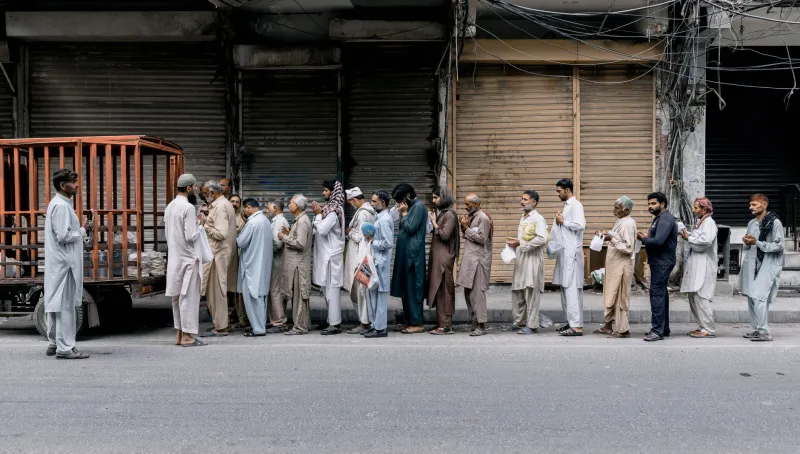
No nation on earth has elevated the queue to quite the cultural institution that Britain has. We form them instinctively, maintain them ferociously, and feel a deep, righteous fury when someone jumps one. We queue for buses, for bakeries, for the post office, for theme park rides we're not even sure we want to go on. We queue, and we are proud of it.
But here's something nobody tells you when you're sighing your way through the supermarket self-checkout line on a rainy Thursday: that queue might actually be good for you.
Not metaphorically. Not in a "builds character" way. Genuinely, measurably, scientifically good for your physical and mental wellbeing. Buckle up — or rather, join the back and wait your turn.
The Involuntary Pause
Modern British life is, for most people, a relentless sprint. Notifications, deadlines, packed commutes, back-to-back meetings, the tyranny of the to-do list. We have engineered almost every moment of our days into purposeful activity, which sounds productive until you learn what chronic purposefulness does to the human nervous system.
It exhausts it, is the short answer.
The brain needs unscheduled time — moments without agenda, without a screen, without a task to complete. Psychologists call this "unfocused attention," and it's during these periods that the brain's default mode network activates: the neural system responsible for creativity, emotional processing, and the kind of quiet self-reflection that keeps us psychologically balanced.
Enter: the queue.
Queuing is one of the last remaining socially mandated pauses in British life. You cannot rush it. You cannot optimise it. You simply have to stand there — and in doing so, you accidentally give your brain exactly the kind of break it's been quietly screaming for.
Dr. Harriet Buckley, a psychologist at the University of Leeds who studies attention and recovery, puts it plainly: "We're chronically under-rested mentally, not because we don't sleep enough, but because we don't allow ourselves unstructured time when we're awake. A queue forces that. It's an accidental mindfulness intervention."
Patience Is a (Cardiovascular) Virtue
There's an interesting physiological dimension to queuing that rarely gets discussed. When we're in a queue — particularly one that's moving at a reasonable pace — our bodies often enter a state of low arousal: heart rate settles, breathing slows slightly, the shoulders drop away from the ears.
This is in stark contrast to the fight-or-flight micro-activations that ping through us dozens of times a day in response to emails, urgent Slack messages, and the general ambient stress of modern work life. The queue, paradoxically, is calmer than almost everything surrounding it.
Of course, this assumes you're not the sort of person who treats queuing as a competitive sport — white-knuckling your trolley, calculating which checkout lane is moving fastest, radiating low-level fury at the person ahead who's paying by cheque. That, it should be noted, produces the opposite physiological effect. The health benefits of queuing are available specifically to those who surrender to it.
And there's something almost meditative about that surrender. Accepting that you cannot control the pace, that the queue will move when it moves, that fighting it is entirely futile — this is, stripped of the supermarket context, a fairly sophisticated mindfulness practice.
The Social Glue Nobody Talks About
British queues have a social texture that's easy to miss if you're staring at your phone. But look up for a moment and you'll find something rather lovely happening: people watching, low-stakes observation, the occasional eye-roll exchanged with a stranger over a shared absurdity, the brief conversation that starts with "has this been moving at all?" and ends with someone recommending a good podcast.
These micro-interactions — fleeting, low-commitment, undemanding — are precisely the kind of social contact that research consistently links to improved mood and reduced loneliness. They're not friendships. They're not even particularly memorable. But they are genuine human connection, and they happen in queues with a regularity that's easy to underestimate.
Social psychologist Dr. Oliver Marsh, who has studied British public behaviour, describes queues as "spontaneous social infrastructure" — temporary communities formed around shared experience and a common goal. "There's a kind of solidarity in a queue," he says. "Everyone's in the same boat. That shared experience, however minor, creates a momentary bond. And those bonds, accumulated over time, contribute to a sense of social embeddedness — of being part of something."
In an era of increasing social isolation, that's not nothing. That's actually quite a lot.
Anticipation: The Secret Ingredient
Here's a finding from behavioural science that applies beautifully to the queue: anticipation is, neurologically speaking, genuinely pleasurable. The brain releases dopamine not just when we receive a reward, but in the expectation of one. The closer we get to the front of the queue, the stronger that anticipatory signal becomes.
This is why queuing for something you actually want — a freshly baked pastry, tickets to a sold-out gig, a beloved National Trust tearoom — carries its own particular joy. The wait becomes part of the experience. It builds the reward. Research from the Journal of Consumer Psychology found that people who queue for something tend to value it more highly than those who receive it instantly — and report greater satisfaction with the experience overall.
Britain, with its magnificent patience for orderly waiting, has been leveraging this psychological mechanism for centuries without realising it. Every bank holiday queue at a National Trust property is, in effect, a dopamine delivery system with a gift shop at the end.
Put the Phone Away
There is, of course, one significant caveat to all of this: most of the benefits evaporate the moment you pull out your phone.
The mindful pause becomes another scroll session. The opportunity for ambient social observation disappears behind a screen. The unfocused attention — the very thing your brain is desperate for — gets immediately co-opted by Instagram.
The queue only works as a wellness tool if you actually inhabit it. Stand there. Look around. Notice things. Let your mind wander to wherever it wants to go. Allow the mild tedium to wash over you without immediately reaching for a distraction.
It sounds almost laughably simple. It is almost laughably simple. But in a world engineered to fill every spare second with stimulation, choosing to just stand there is a quietly radical act.
So next time you find yourself third in line at the deli counter, resist the urge to check your emails. You're not waiting. You're recovering.
And honestly? You're very welcome to it.