Silver Strikers: The Beautiful Game's Beautiful Comeback for Britain's Over-50s
The Pitch Revolution Nobody Saw Coming
Picture this: it's a Tuesday morning in Wolverhampton, and 68-year-old Dave Thompson is absolutely fuming. Not because his team's losing 3-2, but because the referee's just blown for half-time right when he was about to slot home what would've been the equaliser of the century.
"Twenty years ago, I'd have been on the golf course by now," Dave chuckles, towelling off the sweat. "But this? This is proper football. Just without the knackered knees."
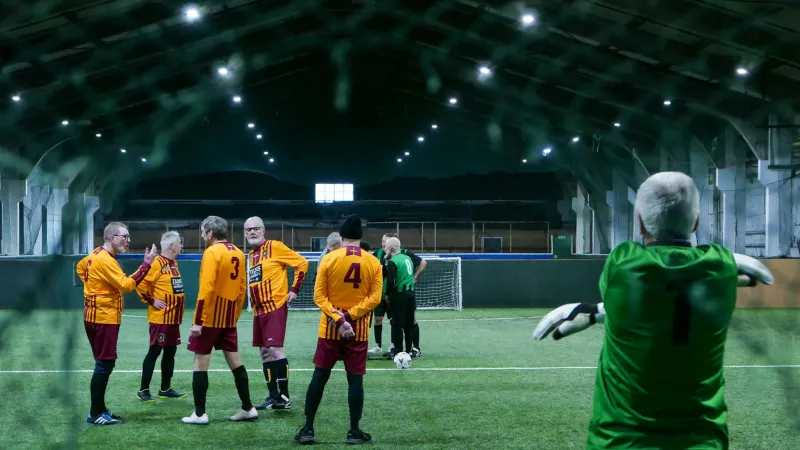
Dave's not alone in his enthusiasm. Across Britain, walking football — the slower, safer sibling of the traditional game — is experiencing a boom that's caught everyone from local councils to NHS commissioners completely off guard. What started as a handful of experimental clubs five years ago has mushroomed into a nationwide movement with over 1,200 active clubs and counting.
More Than Just Slower Football
The rules are beautifully simple: no running (obviously), no tackling above waist height, and the ball must stay below head level. But don't mistake this for a gentle kickabout in the park. The competitive spirit burns just as bright, and the health benefits are proving to be nothing short of remarkable.
Dr Sarah Chen, a sports medicine consultant who's been tracking walking football participants across three NHS trusts in the North West, has some eye-opening data to share.
"We're seeing consistent improvements in cardiovascular fitness, balance, and bone density," she explains. "But perhaps more importantly, we're seeing people who haven't exercised in decades suddenly clocking up four hours of moderate activity per week. That's gold dust from a public health perspective."
The numbers back up her enthusiasm. A recent study following 400 walking football players over 18 months found that 73% showed improved blood pressure readings, whilst 68% reported better sleep quality. Perhaps most tellingly, GP visits among regular players dropped by an average of 22%.
The Social Goal That Matters Most
But ask any walking football convert what keeps them coming back, and fitness rarely tops the list. It's the banter, the belonging, and the simple joy of being part of a team again.
"I lost my wife three years ago," shares Margaret Knowles, 61, who captains the Grimsby Gulls women's walking football team. "The house felt like a tomb. Then my daughter dragged me along to this, and suddenly I'm arguing with the ref again, celebrating goals, and going for coffee with the girls after matches. It's given me my spark back."
This social dimension hasn't gone unnoticed by mental health professionals. The combination of gentle exercise, social interaction, and shared purpose creates what psychologists call a 'triple threat' against depression and anxiety — conditions that disproportionately affect older adults living alone.
The NHS Gets Its Boots On
What's particularly clever about walking football's rise is how quietly the NHS has been backing it. Rather than flashy campaigns or expensive equipment, they've been funding club startups through something called 'social prescribing' — essentially, GPs can now recommend walking football alongside traditional treatments.
"We're not talking about massive investment here," explains Tom Bradley, public health commissioner for Leeds City Council. "A typical walking football session costs us about £15 per participant. Compare that to a single A&E visit or a hip replacement surgery, and the maths becomes very compelling very quickly."
Scotland's leading the charge with its 'Active Ageing' initiative, which has seen walking football clubs spring up in community centres from the Highlands to the Borders. Wales isn't far behind, with Swansea City FC now running walking football sessions for over-50s at their training ground.
The Beautiful Game's Beautiful Future
The sport's governing body, England Walking Football Association, reckons they'll hit 2,000 clubs by next summer. They're probably being conservative.
Clubs are reporting waiting lists, and not just in the obvious places. Rural communities are embracing walking football as enthusiastically as urban centres, with village halls and school playgrounds hosting matches that would make Premier League crowds proud in terms of passion, if not pace.
"People think we're just old folks having a gentle run-around," laughs Dave Thompson, back in Wolverhampton. "But you should see us during penalty shootouts. The tension's exactly the same as it was when I was 25. The only difference is we can all still walk the next morning."
Beyond the Final Whistle
As Britain grapples with an ageing population and stretched healthcare resources, walking football represents something rare: a solution that's both cost-effective and genuinely beloved by those it's meant to help.
The sport's growing so fast that the FA is now running coaching courses specifically for walking football referees — because apparently, even at walking pace, players still need someone to argue with about offside decisions.
Which, when you think about it, is exactly as it should be. Some things about football — the beautiful game — should never change. Even when everything else slows down a bit.