Kettle On, Stress Off: The Science Behind Britain's Most Underrated Mental Health Ritual
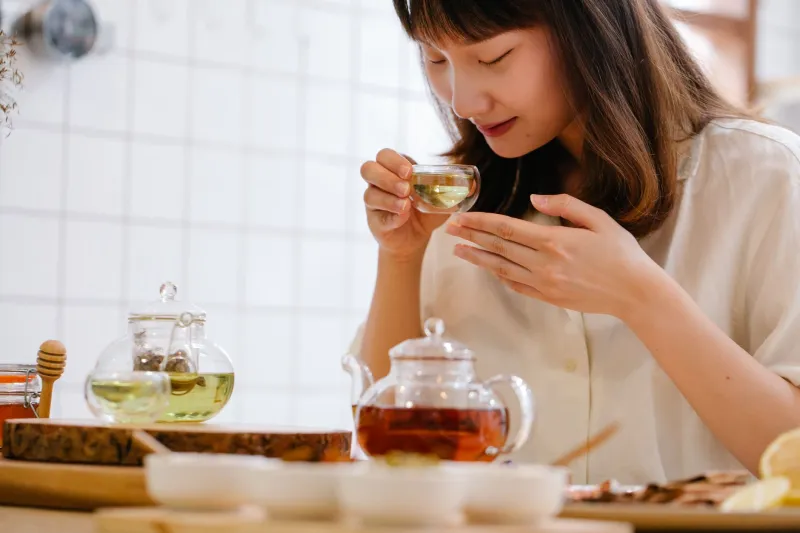
If you want to understand the British relationship with tea, forget the beverage. Forget the Earl Grey versus builder's debate, forget the milk-in-first controversy, forget even the biscuit question. The real magic of Britain's tea culture has almost nothing to do with what ends up in the mug.
It's about the pause.
That small, enforced interruption — kettle clicked on, wait, watch the steam, pour, brew, wait again — is, according to a growing body of behavioural science, one of the most effective mental health interventions available to the average British person. And unlike the meditation apps, the breathwork courses, and the wellness retreats, it's been hiding in plain sight on every kitchen worktop in the country for centuries.
The Neuroscience of 'I'll Put the Kettle On'
When something difficult happens — a row, a shock, bad news, a stressful meeting — the British response is almost pavlovian: I'll put the kettle on. We've always known instinctively that this helps. Science is now explaining exactly why.
The act of making tea triggers what psychologists call a 'behavioural interrupt' — a deliberate break in the stress cycle that prevents the brain from ruminating further. Dr. Daisy Fancourt, associate professor of psychobiology at UCL, whose research has examined ritual and mental health, notes that structured, repetitive behaviours activate the brain's default mode network in ways that promote calm and self-reflection. The tea ritual — with its predictable sequence of actions — is, in effect, a form of active mindfulness that requires no training, no app, and no subscription fee.
"What's remarkable about rituals like making tea," she has noted in her broader research, "is that they provide structure during moments of emotional dysregulation. The predictability itself is soothing."
In simpler terms: your brain calms down because it knows what comes next. Kettle, water, cup, bag, pour. It's a script. And scripts, it turns out, are deeply reassuring to an anxious mind.
Three Minutes That Change Everything
The average kettle takes between two and four minutes to boil. That's an enforced pause that no notification, no message, and no colleague can interrupt without some social awkwardness. You're committed. You're waiting. And in that waiting, something neurologically significant is happening.
Research on micro-recovery — brief, intentional breaks from cognitive or emotional effort — consistently shows that even two to three minutes of disengagement can meaningfully restore attentional capacity and reduce stress hormone levels. A 2021 study from the University of Sussex found that short breaks involving warm beverages specifically were associated with greater reductions in perceived stress compared to cold drink breaks, likely due to the combined effect of warmth (which triggers physiological relaxation responses) and the ritualistic preparation involved.
So the kettle isn't just boiling water. It's buying you the neurological breathing room your overworked prefrontal cortex desperately needs.
Why Apps Can't Compete With a Teapot
The UK wellness app market is booming — Calm, Headspace, and their competitors collectively generate hundreds of millions in revenue from British users alone. And yet engagement data tells a sobering story: most people who download mindfulness apps abandon them within two weeks.
The tea ritual, by contrast, has a compliance rate approaching 100%. Nobody forgets to make tea. Nobody falls off the tea wagon. Nobody feels guilty about inconsistent tea practice.
This is the crux of what behavioural scientists find so fascinating about it. The most effective mental health habit is one that's already embedded in your day, attached to social norms, and intrinsically rewarding. Tea ticks every single one of those boxes.
Professor Charles Spence, experimental psychologist at Oxford University and researcher into the multisensory experience of food and drink, has written extensively on how the warmth, aroma, and ritual of hot beverages engage multiple sensory systems simultaneously — creating what he describes as a 'grounding' effect that anchors the drinker in the present moment. That, friends, is mindfulness. Achieved via a Yorkshire teabag and a slightly chipped mug.
The Social Dimension Nobody's Talking About
Here's where it gets even more interesting. Tea in Britain is rarely a solitary ritual. The offer — fancy a brew? — is one of the most potent social bonding mechanisms in the national repertoire. It signals care. It creates shared pause. It opens conversational space.
In workplaces, the tea round is a micro-community moment that builds collegial trust. At home, it's a signal of comfort and availability. In times of crisis, it's the first thing we reach for because it communicates, wordlessly, I'm here, I've got you, let's be still for a moment together.
This social function is not trivial. Loneliness researchers consistently identify shared rituals as one of the most effective buffers against social isolation. The tea break is a shared ritual that happens multiple times a day, across every demographic, every region, and every walk of British life.
Karen, a 58-year-old nurse from Sheffield, puts it simply: "On my ward, the ten minutes we spend having a cup of tea together at the start of a shift is the thing that holds us together. It's not about the tea. It's about the ten minutes."
How to Make the Most of Your Brew
If you want to supercharge what's already a surprisingly potent mental health tool, behavioural scientists suggest a few small tweaks:
Step away from your desk. Making tea at your workstation defeats the purpose. The physical movement — even just to the kitchen — amplifies the cognitive break.
Leave your phone behind. Just for the brew. Those three minutes without a screen are significantly more restorative than three minutes of scrolling while the kettle boils.
Engage your senses deliberately. Notice the sound of the water. Feel the warmth of the mug. Smell the steam. This isn't woo — it's a recognised technique for activating the parasympathetic nervous system, your body's natural calming mechanism.
Make it for someone else occasionally. The act of offering tea to another person triggers prosocial reward pathways in the brain. You'll feel better for having asked.
The Most British Prescription Ever Written
In a healthcare landscape where mental health services are stretched to breaking point and waiting lists for therapy can run to months, there's something both poignant and genuinely hopeful about the idea that one of our most effective daily mental health tools is already built into the cultural fabric.
The kettle is always there. The pause is always available. And the reset button, it turns out, has been sitting on your worktop all along.
Put it on. You've earned it.