The 20-Minute Lunch Break That Could Save Your Heart: Why Green Space Walks Are Being Prescribed Across England
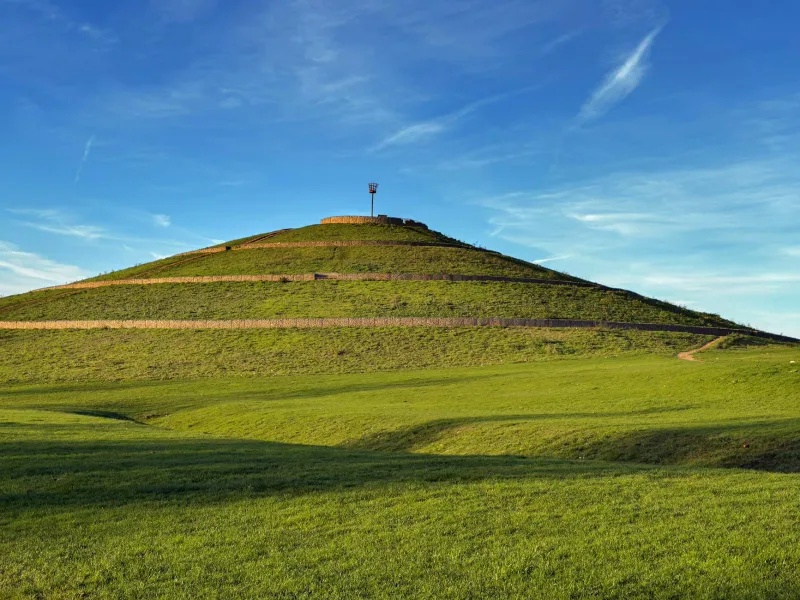
It doesn't require a gym membership. It doesn't demand lycra, a fitness tracker, or a particularly early alarm. It costs nothing, takes about twenty minutes, and according to a growing body of compelling UK research, it could be one of the most powerful things you do for your cardiovascular health all week.
We're talking about a walk in the park. Literally.
New findings from researchers across Britain are adding to an already persuasive pile of evidence suggesting that regular, short walks through green spaces — urban parks, nature reserves, riverside paths, even tree-lined streets — deliver measurable benefits to heart health, stress hormone levels, and mental wellbeing. And crucially, these benefits show up even in the middle of cities, even on cloudy days, and even when the walk lasts less than half an hour.
What the Research Actually Shows
A study published earlier this year by researchers at the University of Exeter, building on their long-running work into green space and health, found that people who spent at least 120 minutes per week in natural environments reported significantly better physical health and psychological wellbeing than those who didn't — regardless of whether they lived in rural or urban settings.
Separate research from the University of Edinburgh used wearable sensor data to track the brain activity of volunteers as they walked through different urban environments. The results were striking: participants showed measurably lower frustration, arousal, and mental fatigue when moving through green areas compared to busy streets — even when the green spaces were modest city parks rather than sweeping countryside.
On the cardiovascular side, the picture is equally encouraging. Studies tracking cortisol levels — the body's primary stress hormone, which in chronically elevated states contributes to high blood pressure, arterial inflammation, and increased heart attack risk — consistently show that time spent in green environments produces a meaningful drop. Even a 20-minute park walk has been shown to reduce cortisol levels significantly compared to sitting indoors or walking along a busy road.
"The evidence is now robust enough that we can say with real confidence: green space exposure is good for your heart," says Dr Philippa Gareth, a public health researcher at King's College London. "We're not talking about dramatic, exhausting exercise. We're talking about gentle, regular movement in natural settings. That's accessible to a huge proportion of the population."
Enter Green Social Prescribing
The NHS and local authorities across England have been paying close attention. A national pilot scheme — Green Social Prescribing — has been trialled across seven test sites in England since 2021, with results promising enough that expansion is now underway.
The concept is straightforward. Rather than — or alongside — conventional medical treatment, GPs and social prescribing link workers connect patients to nature-based activities in their local area. Guided park walks, community gardening projects, conservation volunteering, riverside rambles, outdoor mindfulness sessions — the range of activities on offer varies by region, but the underlying prescription is the same: get outside, get moving, and let nature do some of the heavy lifting.
The pilot results, published by NHS England, found that participants reported reduced anxiety and depression, improved social connection, and greater physical activity levels. Crucially, these were often people who wouldn't have engaged with traditional gym-based or structured exercise referrals — green social prescribing reached demographics that conventional approaches frequently miss.
Sheffield, one of the original pilot sites, has developed a particularly impressive network of walking groups operating across the city's remarkable 250-plus parks — Sheffield famously has more trees per person than almost any other city in Europe, making it an ideal testing ground. Participants in the Sheffield scheme reported feeling more connected to their communities and significantly less isolated, alongside the physical health improvements.
Your City's Green Spaces Are More Powerful Than You Think
One of the most encouraging threads running through this research is its urban applicability. You don't need to live near the Peak District or the Lake District to benefit. Britain's cities are, on the whole, better equipped with accessible green space than people often realise.
London's Royal Parks — Hyde Park, Regent's Park, Victoria Park in the East End — are free to access and collectively cover thousands of acres. The city's walking festival, which takes place each spring, organises free guided walks through green corridors across all 32 boroughs, including routes specifically designed for heart health and stress reduction.
In Manchester, the Fallowfield Loop and the Mersey Valley Countryside Warden Service offer free walking events through surprisingly lush green corridors within minutes of the city centre. Birmingham has Sutton Park — one of the largest urban parks in Europe — as well as a network of canal towpaths that provide linear green routes through the heart of the city.
Edinburgh's Holyrood Park sits literally at the end of the Royal Mile. Bristol's Ashton Court estate is vast, free, and a fifteen-minute cycle from the city centre. Newcastle has Jesmond Dene. Leeds has Roundhay Park.
The point is: wherever you are in the UK, the green space is probably closer than you think.
How to Make It a Habit (Without Hating Yourself)
The research suggests that consistency matters more than intensity. You don't need to power-walk or hit a specific heart rate target. The benefits accrue through regular, repeated exposure — which means finding something you actually enjoy is far more important than optimising the exercise itself.
A few practical nudges that the evidence supports:
The lunch break swap. Swapping even two or three desk lunches per week for a 20-minute park walk has been shown to meaningfully reduce afternoon cortisol levels and improve mood and focus for the rest of the working day. It's a remarkably low-effort intervention with a disproportionately high return.
Walk with someone. The social element amplifies the benefit. Several of the green social prescribing schemes specifically use group walking as their format, precisely because the combination of movement, nature, and human connection produces better outcomes than any of the three in isolation. Find a colleague, a neighbour, or search for a local walking group through the Ramblers Association, which has free groups operating across the entire country.
Leave your headphones at home — occasionally. This one's contentious, but some research suggests that allowing yourself to be genuinely present in a natural environment — noticing sounds, textures, light — deepens the restorative effect. Even if you can't face a fully unplugged walk, try the last five minutes in silence.
Ask your GP. If you're being treated for high blood pressure, anxiety, or low mood, it's worth specifically asking whether green social prescribing or an exercise referral scheme is available in your area. Availability varies, but it's expanding — and you won't know unless you ask.
The Simplest Health Upgrade Available
In a wellness landscape that frequently makes feeling better seem complicated and expensive, there's something genuinely heartening about this particular story. The most cutting-edge prescription your GP might soon be writing is: go to the park. Walk around. Come back next week.
The science says it works. The NHS is starting to act on it. And Britain — with its commons, its coastal paths, its city parks, its ancient woodlands — has the infrastructure to make it happen for almost everyone.
So tomorrow, when the lunch hour rolls around, skip the sad desk sandwich. Grab your coat. Find the nearest patch of green. And walk.
Your heart will thank you for it.